EUROPE DIRECT Rijeka enters a new five-year period of activity

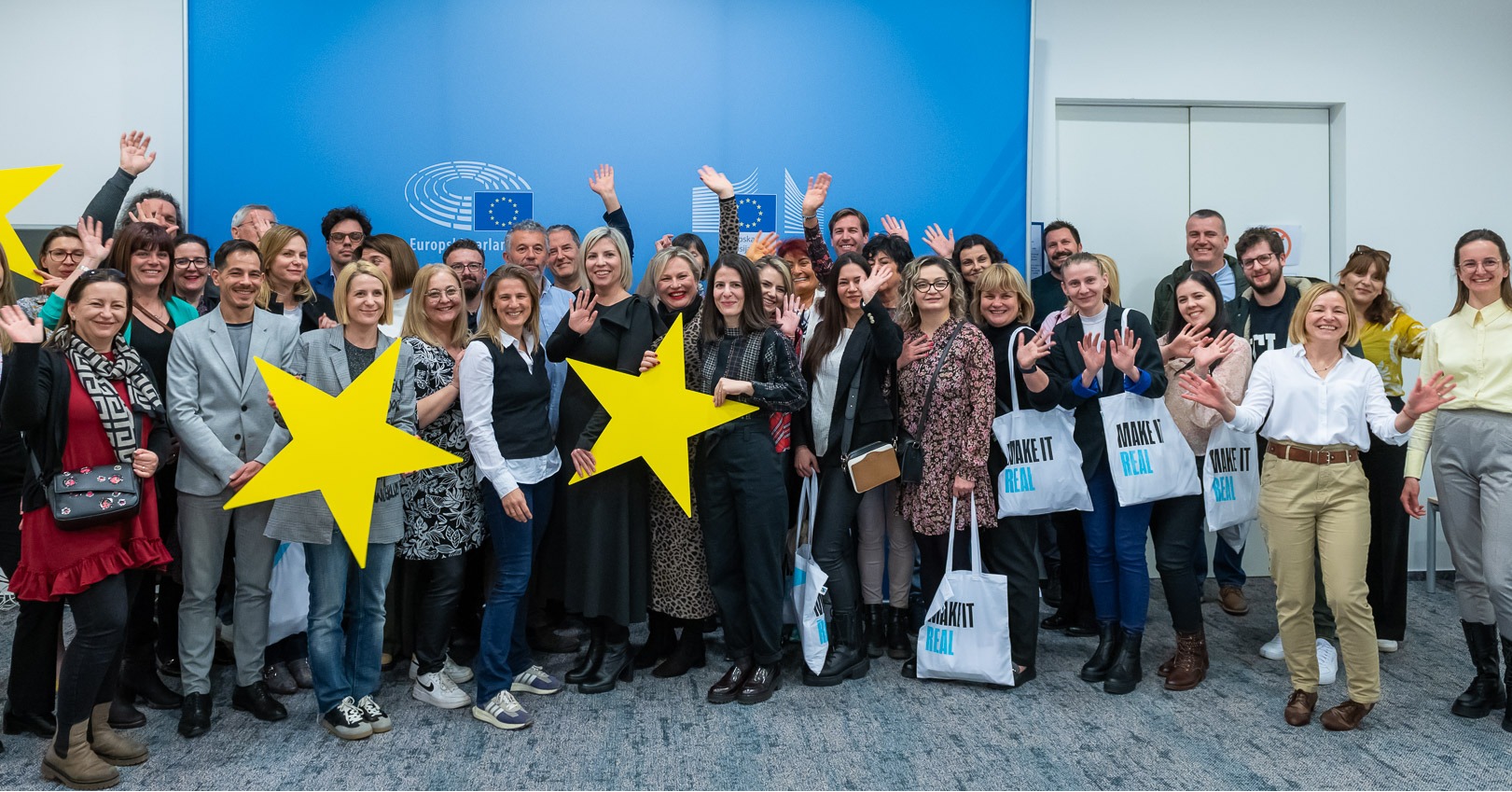
The Rijeka Development Agency Porin received a new five-year mandate to run the EUROPE DIRECT Rijeka Centre, which confirmed the high quality of the prepared programme and the Centre's work so far.

A total of 47 applications are being evaluated. European Commission confirms continuation of EUROPE DIRECT Rijeka. This decision reflects the continuity of the Centre's work and the European Commission's trust in the programme prepared by the Rijeka Development Agency Porin based on the experience and results so far.

In the evaluation, the European Commission highlighted in particular a well-designed communication strategy, a strong local and regional network of partners and innovative approaches to working with citizens, including participatory formats, clear segmentation of target groups and the long-term impact of activities. Such a result is also a recognition of the five-year work of the center EUROPE DIRECT Rijeka in the community, which the Rijeka Development Agency Porin has been implementing since May 2021. This confirms the European Commission's trust in the work carried out so far, the quality of the activities carried out so far and the capacities of EUROPE DIRECT Rijeka.


EUROPE DIRECT is the official contact point of the European Commission whose aim is to bring the European Union closer to citizens at local and regional level, through information, dialogue and active involvement in European topics.


Five years of community service

EUROPE DIRECT Rijeka has been shaped from the very beginning as Practical and accessible European Union contact point, focusing on the real needs of citizens in the territory of the City of Rijeka and the Primorje-Gorski Kotar County. The focus of the work was on direct communication, an understandable interpretation of European topics and presence where citizens move and gather.

In the period from 2021 to 2025, the Centre developed a way of working that brings together public events, educational activities, cooperation with local institutions and organisations, and a permanent presence in the media and digital space. By using different formats and channels, European policies and initiatives have been presented through concrete topics from the daily life of citizens.

EUROPE DIRECT Rijeka as a link between the European institutions and the local community, bringing topics such as education, employment, mobility, consumer protection, the environment and digital and media skills closer together in a way that was understandable and applicable to citizens. This approach, based on dialogue, openness and cooperation with local stakeholders, has contributed to raising awareness and trust in the European Union, especially among groups that are often under-represented in public spaces.

Recognizable events and formats

EUROPE DIRECT Rijeka has developed a series of events and communication formats that have become places where citizens meet European topics and have strongly contributed to the visibility of the European Union in the local community.

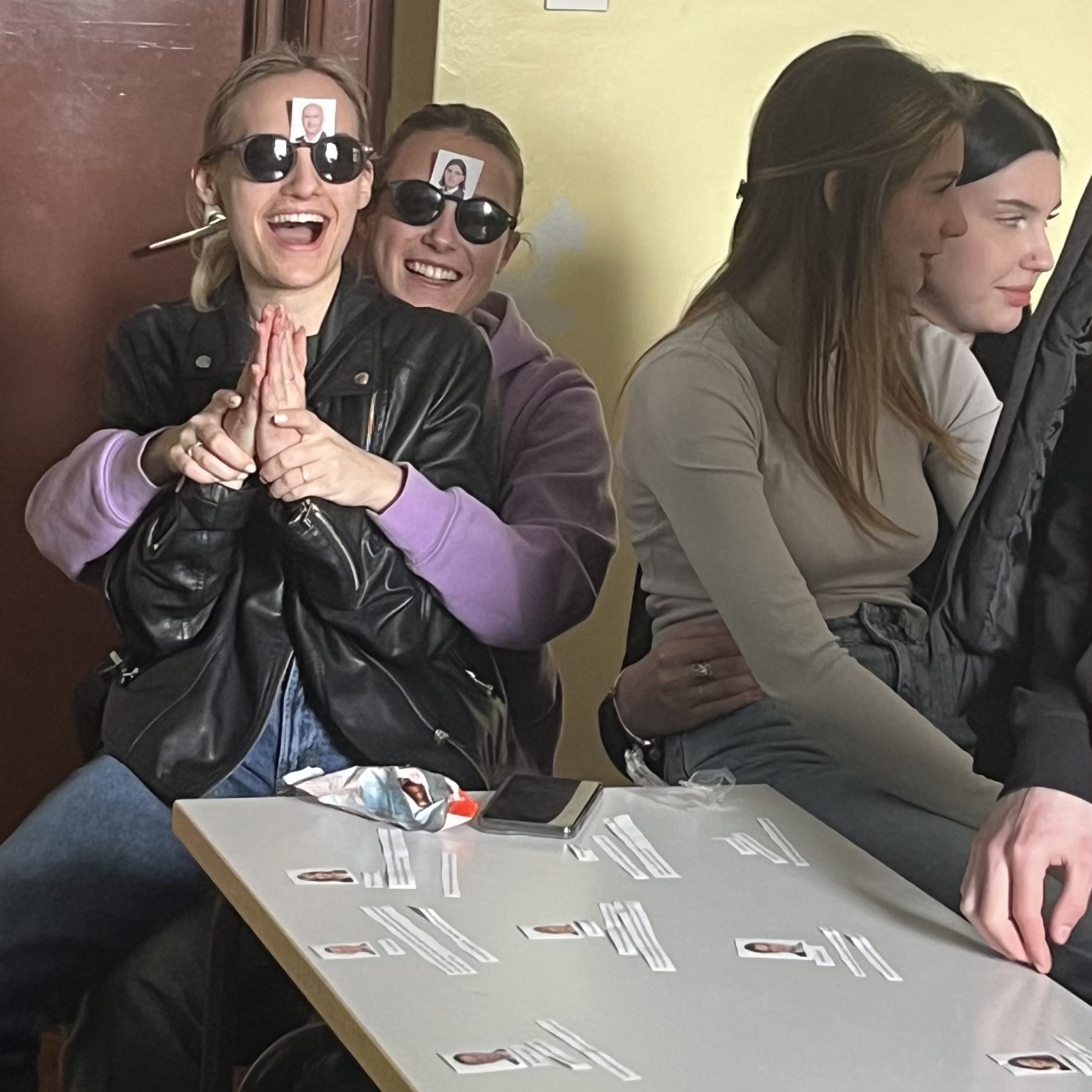
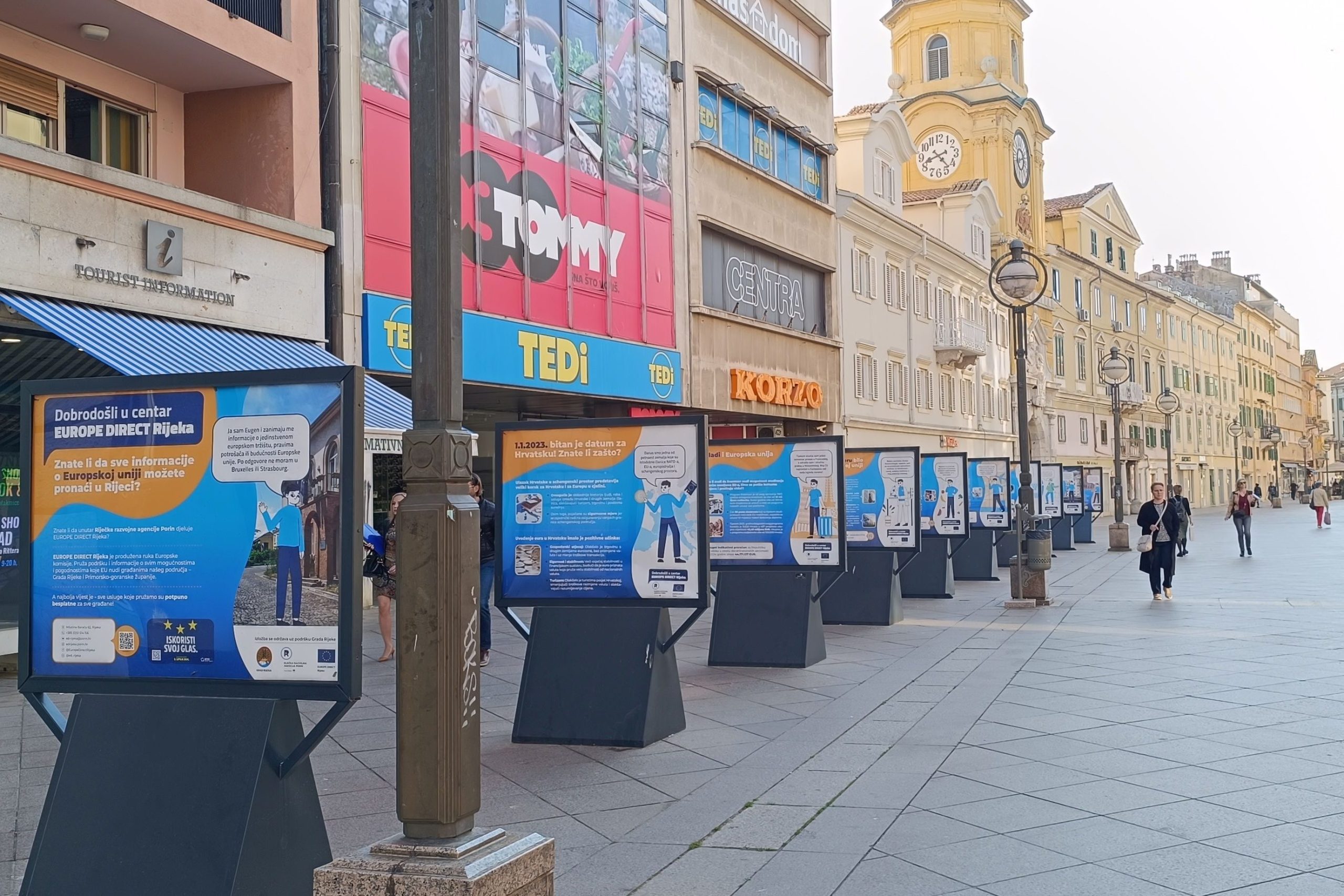
Among them stands out marking Europe Day, which was implemented through public events, educational content and cooperation with local partners, as well as thematic exhibitions the Stations of Corso, which put European topics directly at the heart of urban public space.

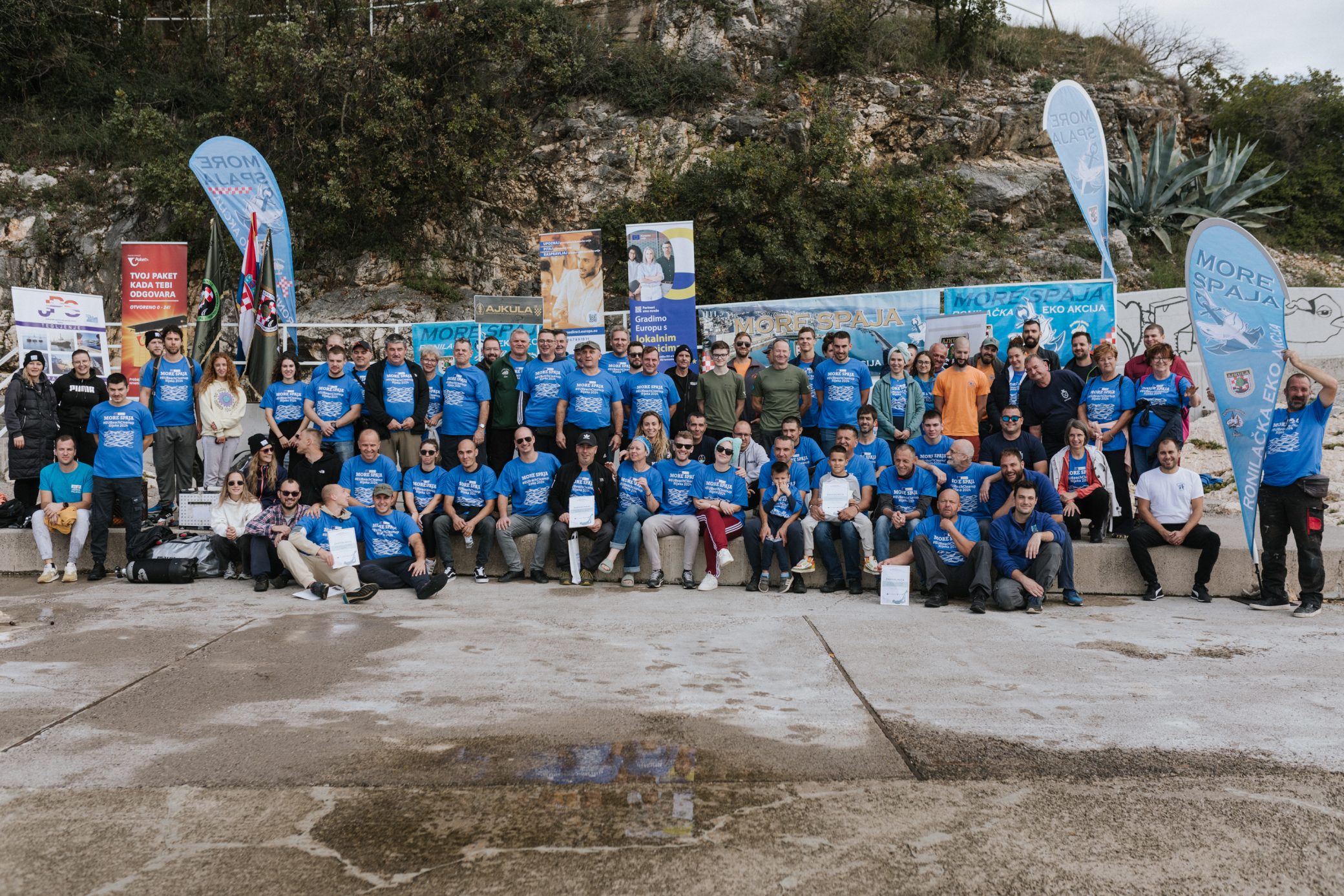
Particular emphasis is placed on activities related to sustainability and environmental protection, highlighting EU Beach Cleanup, a European beach and seabed clean-up initiative aimed at raising awareness of the protection of the sea, the coast and the environment. The initiative was successfully transposed and adapted by the Centre to the local context in cooperation with local partners, associations and institutions, bringing together schoolchildren, volunteers and representatives of different sectors in shared care for the environment.

Citizens’ dialogue and presence in the public space

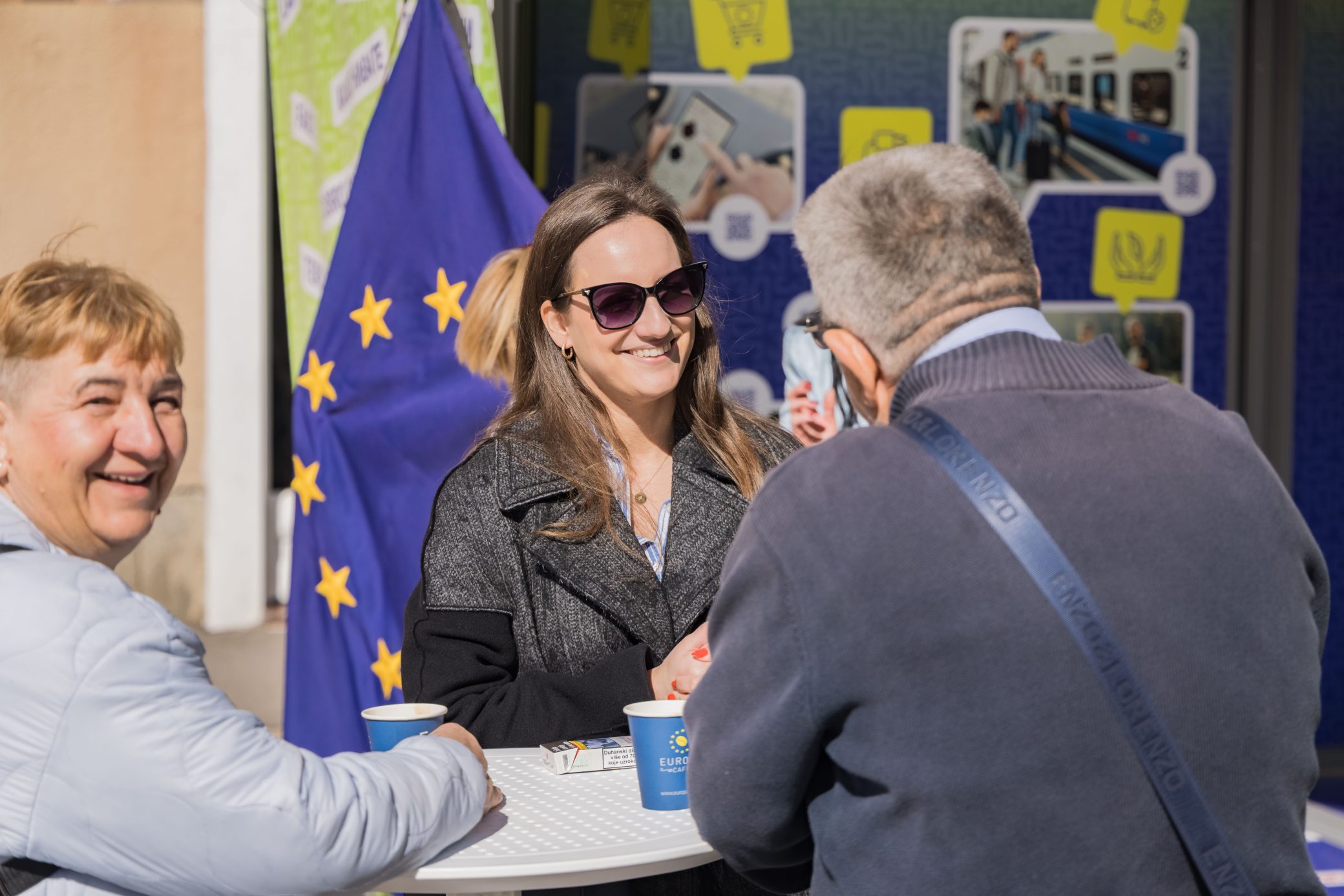
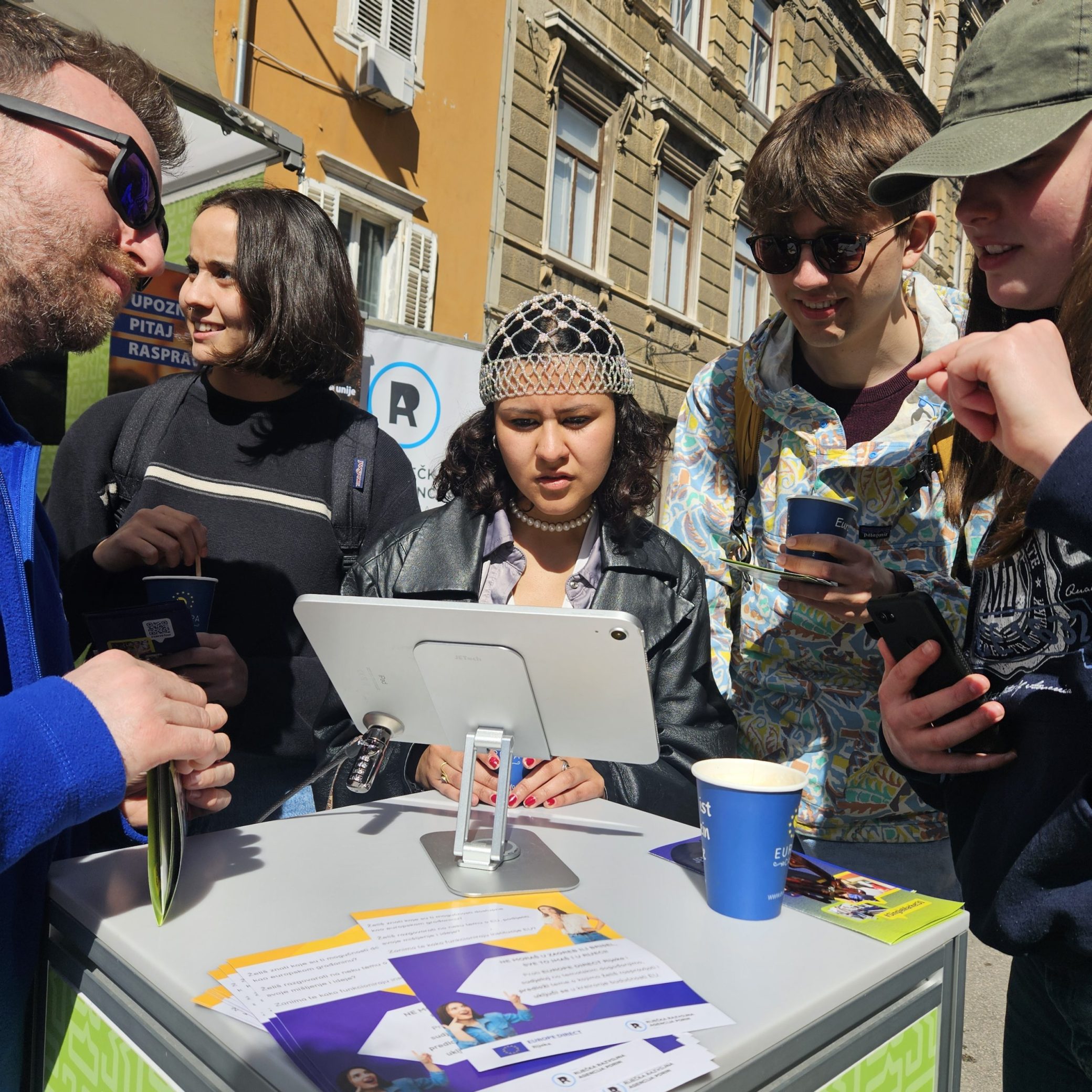
In order to foster an open dialogue with citizens, EUROPE DIRECT Rijeka participated in European initiatives such as: Europe.Coffee Tour, which brought European topics closer to citizens through an informal conversation in the public space, as well as the Single Market Tour, which presents the concrete benefits of the European Union’s Single Market.

Continuous communication was also achieved through the media, in particular through a regular radio broadcast on Radio Korzo: Europe Direct Rijeka, which deals with current European topics, policies and opportunities, always from the perspective of their impact on the local and regional community.

Education, youth and community development

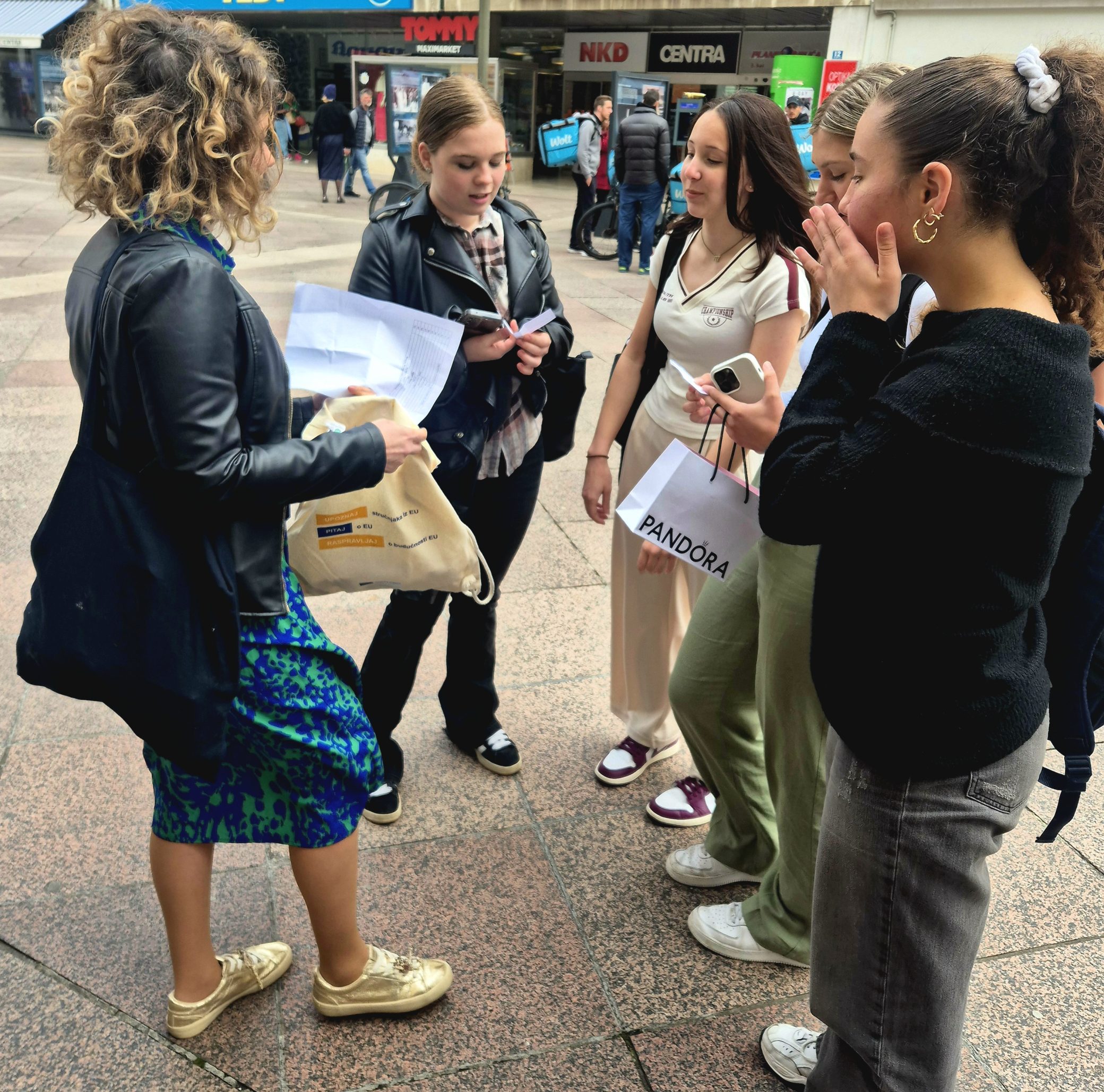
Educational and development activities were an important part of the Center's work. Through the Erasmus Days Erasmus+ opportunities for young people, educational institutions and adults were presented to citizens, while INSPIRA LEADER The conference focused on the development of smart and sustainable communities, with a particular focus on rural areas.

Event Torpedo Days it linked European policies to innovation, technology and entrepreneurship, highlighting the role of the European Union in fostering regional development, digital transformation and new business models.

Eugen as the recognizable face of EUROPE DIRECT Rijeka

In the previous period, it was developed and Eugen, a visual mascot and the educational figure of EUROPE DIRECT Rijeka, designed as an accessible tool for information and communication about the European Union. Eugen is conceived as a "citizens' voice", a character who asks questions, seeks answers and explains complex European topics in a simple way. This communication approach has proven particularly effective in youth work, but also in the wider public space. In a new five-year period Eugene will continue to guide citizens through European topics, as a symbol of continuity, accessibility and a comprehensible Europe.

New five-year period: Continuity and further development

In a new five-year period EUROPE DIRECT Rijeka continues its work with further strengthening of existing activities and development of new approaches, in line with the priorities of the European Commission and the needs of the local community. The focus will be on young people and educational institutions, older citizens and lifelong learning, grassroots activities in more remote and less connected environments, strengthening resilience against disinformation and developing digital and media literacy, as well as working with partners and liaising with development initiatives.

The aim remains the same, bringing the European Union closer to citizens through concrete, understandable and relevant topics and encouraging their active participation in European processes.

The acceptance of the application for the new five-year period confirmed the importance and need for the operation of EUROPE DIRECT Rijeka. Rijeka Development Agency Porin in the new programming period Continues to be a proud and reliable partner of the European Union, dedicated to informing, engaging and empowering citizens and strengthening the European dimension of the local community.

Rijeka Tattoo Expo 2025 - a blend of creativity and 3D technology

Our TECH LAB once again had the opportunity to participate in one of the most creative events in the city The river.

River Tattoo Expo It is the largest tattoo festival in the region and the first Croatian tattoo convention that brings together top artists, tattoo lovers and alternative culture since 2010.

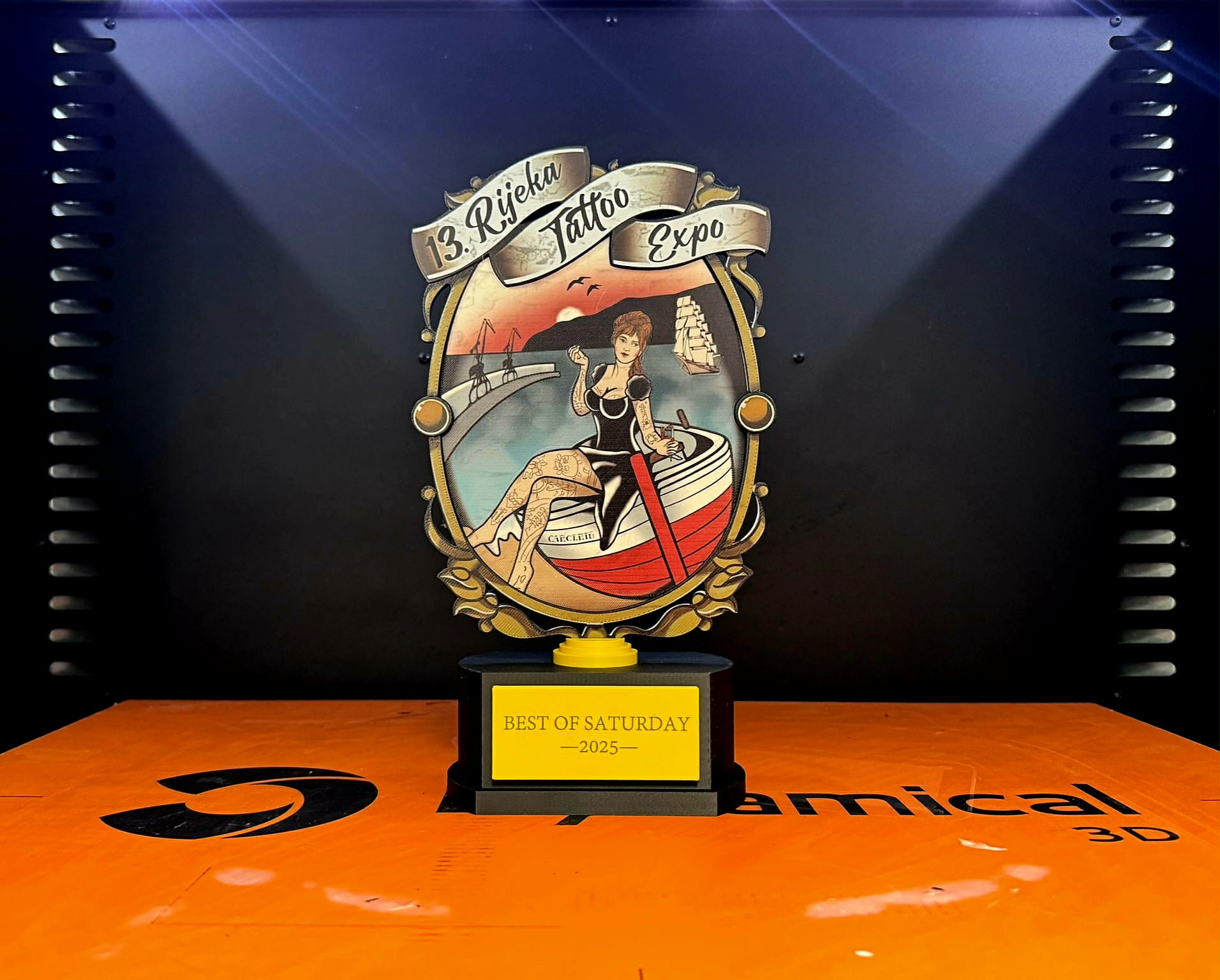
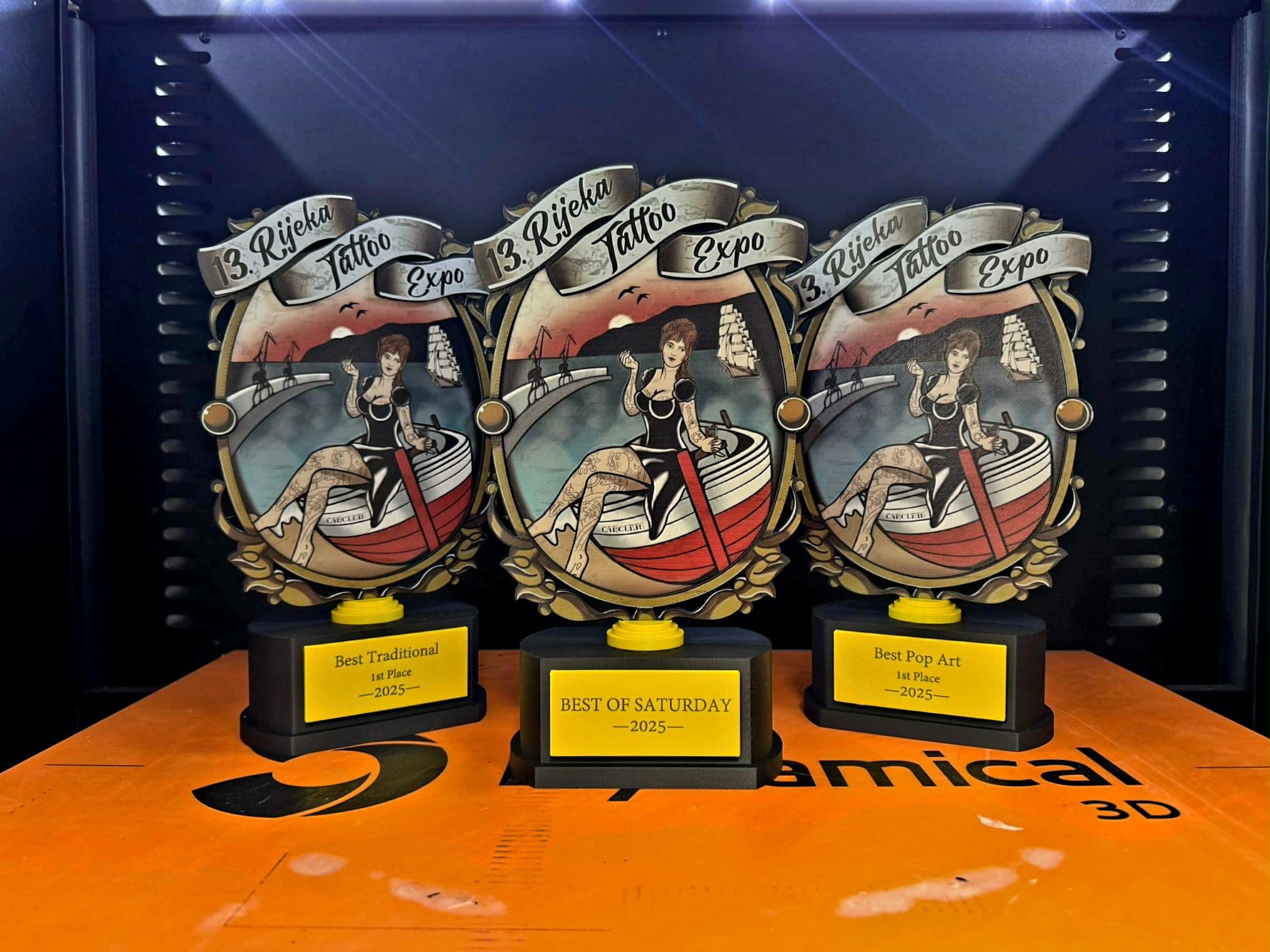
In our own way, we have been a part of this story for the second year in a row. We modeled and 3D printed 44 awards for all competition categories.

This project shows how 3D technology is still applicable outside the industry today, in art, design, creative events and events that are looking for something special and unique.

How did the prizes come about?

The organizer has provided us with visual guidelines and the identity of the convention, and our TECH LAB Taken over the production process:

  • preparation and adaptation of 3D models according to visual identity,
  • multi-hour 3D printing,
  • Finishing with UV printing and laser engraving.

Each award is the result of a combination of professional modeling and quality printing, and the final look is recognized as innovative, modern and completely different from classic awards at such events.

Many thanks to the Rijeka Tattoo Expo organization team for their cooperation and opportunity to contribute to the visual identity of this year's edition. We are glad that our technologies can be part of such creative stories.

Why is this important?

The Tattoo Expo River brings together a community of creatives who appreciate authenticity, detail and originality. The use of 3D technology has made it possible to create prizes that:

  • Cannot get serial production,
  • can be adapted to each category,
  • replicate quickly and accurately,
  • adapt the identity of the event,
  • They are made locally.

This project is another example of how 3D modelling and printing can respond to the needs of completely different users, from industrial teams to artistic and cultural events.

What can our TECH LAB do?

If this project inspired you, more about the services we offer, from 3D scanning and modeling to printing in polymers and metal, check out here.

TECH LAB cooperates on a daily basis with entrepreneurs, event organizers, creative teams, cultural institutions and innovators as technical support in the development of products, prototypes and specially designed solutions.

The NASCHA project has officially started

The two-day kick-off meeting, 26 and 27 November in Trieste, started the implementation of the project NASCHA - North Adriatic Smart Communities Hydrogen Accelerator, important transnational initiatives aimed at developing hydrogen technologies in the North Adriatic region.

The host of the meeting was Area Science Park, Project coordinator, with the participation of all 20 partners from Croatia, Slovenia and the Italian region of Friuli Venezia Giulia. The meeting presented the goals, activities and plans for the next three years, as well as the roles of individual partners in the implementation of the project.

NASCHA the project is funded by the programme I3 Interregional Innovation Investments Facility with a total budget of almost €11 million. Its goal is accelerate the development and deployment of renewable hydrogen through the implementation of five pilot projects and the development of three Smart Communities of Practice in Croatia, Slovenia and Italy.

The project builds on the North Adriatic Hydrogen Valley (NAHV) and strengthens regional capacities in the following areas:

  • urban energy solutions;
  • transport and mobility;
  • sustainable irrigation;
  • production, storage and distribution of hydrogen.

The project will develop TRL 6 solutions to market-ready TRL 9, with a strong focus on standardisation, investment preparation and cross-border knowledge transfer.

From the second year of the project, it will be open. two calls for SME funding, which provides support of up to EUR 60,000 per company, with business acceleration programmes and preparation for investors.

The initial meeting marked a strong start of the project and confirmed a high level of readiness and engagement of all partners. The implementation of the project will contribute to strengthening the North Adriatic hydrogen ecosystem and creating conditions for new technologies, investments and cooperation in the region.

We look forward to playing an active role in the project and contributing to the development of innovative, sustainable and transnationally connected renewable hydrogen solutions.

Photos: Giulia Coppetti&C.J.

Fiscalisation 2.0: New phase of digital business

On the first day of 2026, the Fiscalisation 2.0 system will be implemented, with which the Tax Administration will introduce a modernised framework for the monitoring and exchange of invoice data.

This is an upgrade of the existing fiscalization system, which has been in operation since 2013, and which aims to further digitalisation, transparency and simplification of business processes for entrepreneurs.

What does Fiscalization 2.0 bring?

The new system introduces fiscalisation of non-cash accounts, i.e. the obligation to report also for invoices charged through transaction accounts, cards and other forms of non-cash payment.

While the previous fiscalization (the so-called Fiscalization 1.0) included only invoices paid in cash, the new tax administration model introduces a single system for recording all accounts;, regardless of the method of collection.

The aim of the change is to:

  • reducing the shadow economy and undeclared transport;
  • real-time traffic monitoring;
  • improving the accuracy and reliability of data;
  • Easier exchange of information between taxpayers and the Tax Administration.

Who is in charge of Fiscalization 2.0?

Taxable persons with fiscalisation 2.0 are all taxable persons who issue invoices, including companies, crafts and other entities carrying out an economic activity.

From 1 January 2026 fiscalisation also includes Non-cash accounts issued by fiscalising entities.

For entities that not in the VAT system, allowing them to receive e-Invoices via the application in 2026 Micro-Invoice Tax administrations, available in the eCitizens system.

What does this mean for entrepreneurs?

The introduction of Fiscalization 2.0 brings certain technical and procedural changes in business:

  • Needed upgrade software solutions for invoicing in such a way as to enable declaration and non-cash transactions,
  • all invoices (irrespective of the method of payment) will have to be fiscalised at the time of issuance;
  • the details of the invoices issued will be automatically delivered to the Tax Administration through electronic exchange.

For entrepreneurs, this means a higher degree of digitalisation of business, but also a smaller administration in the long term, as all data will be aggregated in a single system.

Intermediaries in the fiscalization of non-cash accounts

In order to facilitate the application of the new system, the Tax Administration enables entrepreneurs to fulfil the obligation of fiscalization of non-cash accounts also through intermediaries, IT and payment services that ensure technical connection with the Tax Administration.

Intermediaries play a key role in the exchange of data between the business systems of obliged entities and the information system of the Tax Administration. Their task is to ensure that all invoices issued through electronic systems are automatically logged in and recorded in real time.

A list of registered intermediaries, as well as the technical conditions for their use, are available here.

Among the certified intermediaries is our former user Aestus, the company that developed the application Parra and now offers a simple solution for small businesses in line with Fiscalization 2.0.

Preparing for a new system

The Tax Administration announced the publication of technical documentation, instructions and educational materials so that entrepreneurs and manufacturers of fiscal schemes can adapt their systems in a timely manner.
Entrepreneurs are recommended to:

  • contact their IT service providers and check the programme’s compliance with the new requirements;
  • plan the necessary investments and testing of the system in 2025,
  • follow the notices and official publications of the Tax Administration.

Towards full digitalisation

Fiscalisation 2.0 is an important step in the digital transformation of public administration and the business sector. The new system will allow for greater efficiency, reduce administrative burden and ensure more accurate and faster reporting.

For entrepreneurs, this means less paperwork, more transparency and more modern business.


Read more about Fiscalization 2.0 here.