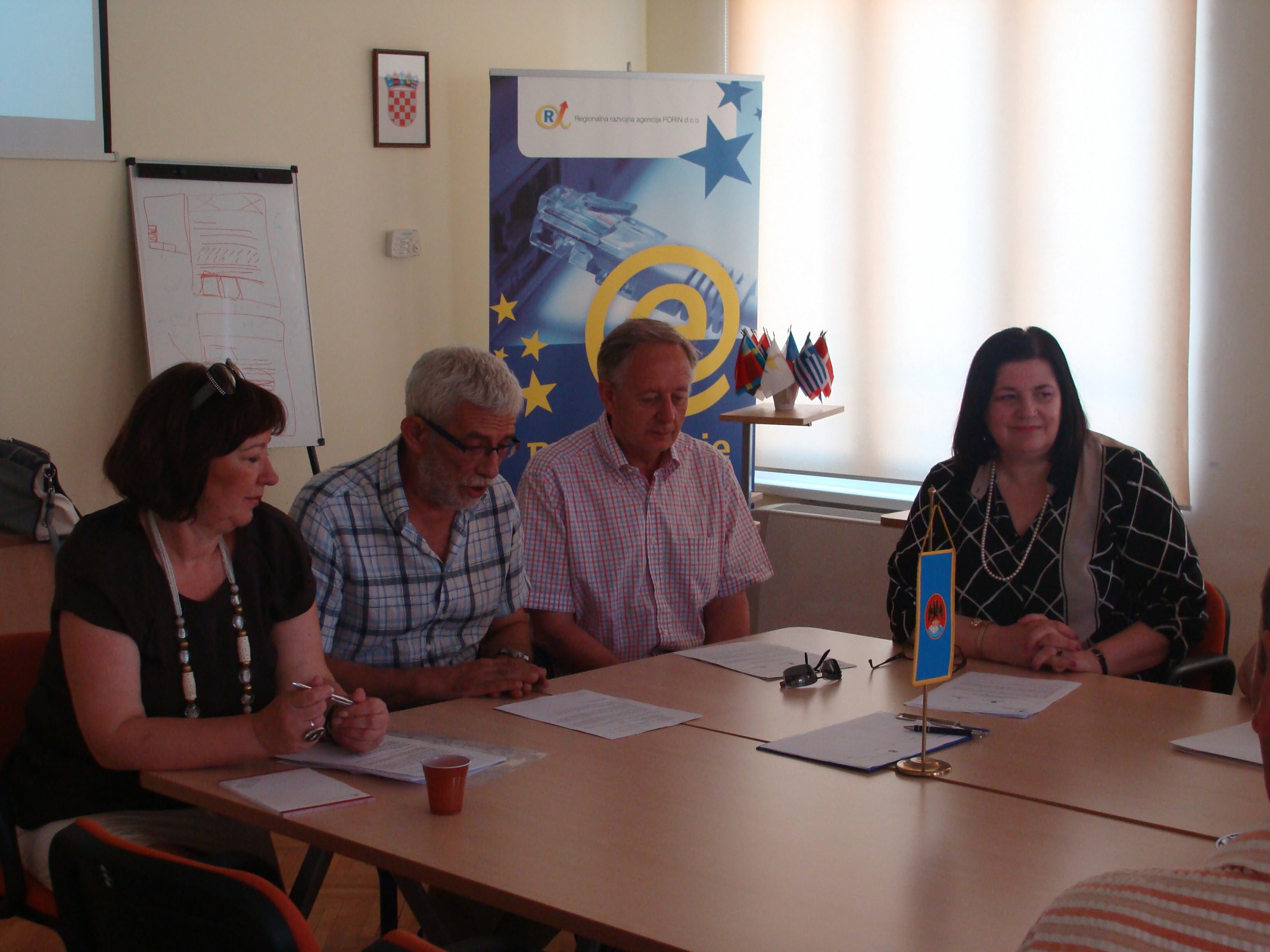
As part of the closing ceremony of the project ‘SMEPASS II – Provision of advisory services to SMEs, Phase II’ carried out under the Regional Competitiveness Operational Programme 2007. The EU Structural Funds Guide for SMEs was also presented in 2013 and aimed at strengthening the competitiveness of small and medium-sized enterprises in the Republic of Croatia.
The aim of the guide is to build on the standard ‘Instructions for Applicants’, which are drawn up and published with the publication of each tender for co-financing from sources of EU funds. The intention of the guide is to indicate in a more casual and informal way the existing risks, hazards, but also the opportunities that must be taken into account in the entire process – preparation for the tender, preparation of the application documents, application, monitoring the evaluation procedure, implementation and contracting of the co-financing and implementation of the investment project itself. The guide aimed, as much as possible, to present the necessary steps in the preparation and application of projects, but it must be stressed that due to the specificities of each individual tender (as shown by the above-mentioned tenders published in the last year and a half), it is impossible to fully cover and guarantee a precise presentation of all the elements that may be encountered in the tenders that will be published in the coming years.
You can download the guide HERE
Source: minpo.hr
On 9 June 2015, in the premises of the Rijeka Development Agency PORIN (RRA Porin), the first workshop on systematic entrepreneurship was held as part of the project Examination of entrepreneurial potential for unemployed persons (IPP) for 2015. RRA Porin started the project in 2012 in cooperation with the Primorje-Gorski Kotar County – Administrative Department for Tourism, Entrepreneurship and Rural Development and the Croatian Employment Service – Regional Office Rijeka.
CES support, education and advice and active participation of users will open up opportunities to turn business ideas into real work and encourage self-employment.

Small step for 3D technology, big for Rijeka Development Agency PORIN
On June 3, 2015, a new technological breakthrough was made in the Rijeka Development Agency Porin with the introduction of 3D printer technology in the Coworking space of the Agency. 3D printer will be used as part of education on 3D printing and modeling technology and now forms the main part of the Center for 3D technology of the Rijeka Development Agency PORIN.
3D printing and modeling will also be one of the main topics of the RiScience conference, which will be held on June 19, 2015 at the RRA PORIN premises. RiScience will deal with the role of 3D interactions, modeling and 3D printing and their current and future role at the point of merging business processes, scientific research and technology.

The Rijeka Development Agency Porin invites you to a promotional event “Challenges in rural tourism” within the HINTLAB project approved by OP Slovenia-Croatia 2007-2013.