We wish you a happy and peaceful Easter

Starting and expanding a business within the European Union today still means facing a number of different rules, procedures and administrative requirements. For entrepreneurs who want to grow beyond the borders of a single country, this often implies coping with 27 legal systems and dozens of different forms of companies, with additional costs, time and complexity.
He is trying to respond to these challenges. a new initiative of the European Commission, EU Inc. – a new, unified and optional legal framework that would allow entrepreneurs to start and develop their business across the European Union, with significantly less administration and faster procedures.
EU Inc. is an additional option for entrepreneurs. An optional form of company that would be available in all Member States of the European Union, but without abolishing existing national models. In other words, entrepreneurs could choose whether they want to operate under national rules or to benefit from a single European framework.
The reason for its introduction is quite clear. While Europe has a strong innovation potential, it is often difficult for companies to move from growth to expansion to international markets. In doing so, the diversity of the legal and administrative environment has proven to be one of the key obstacles.
EU Inc. was conceived as a response to this problem, an attempt to make business within the EU simpler, faster and more predictable.
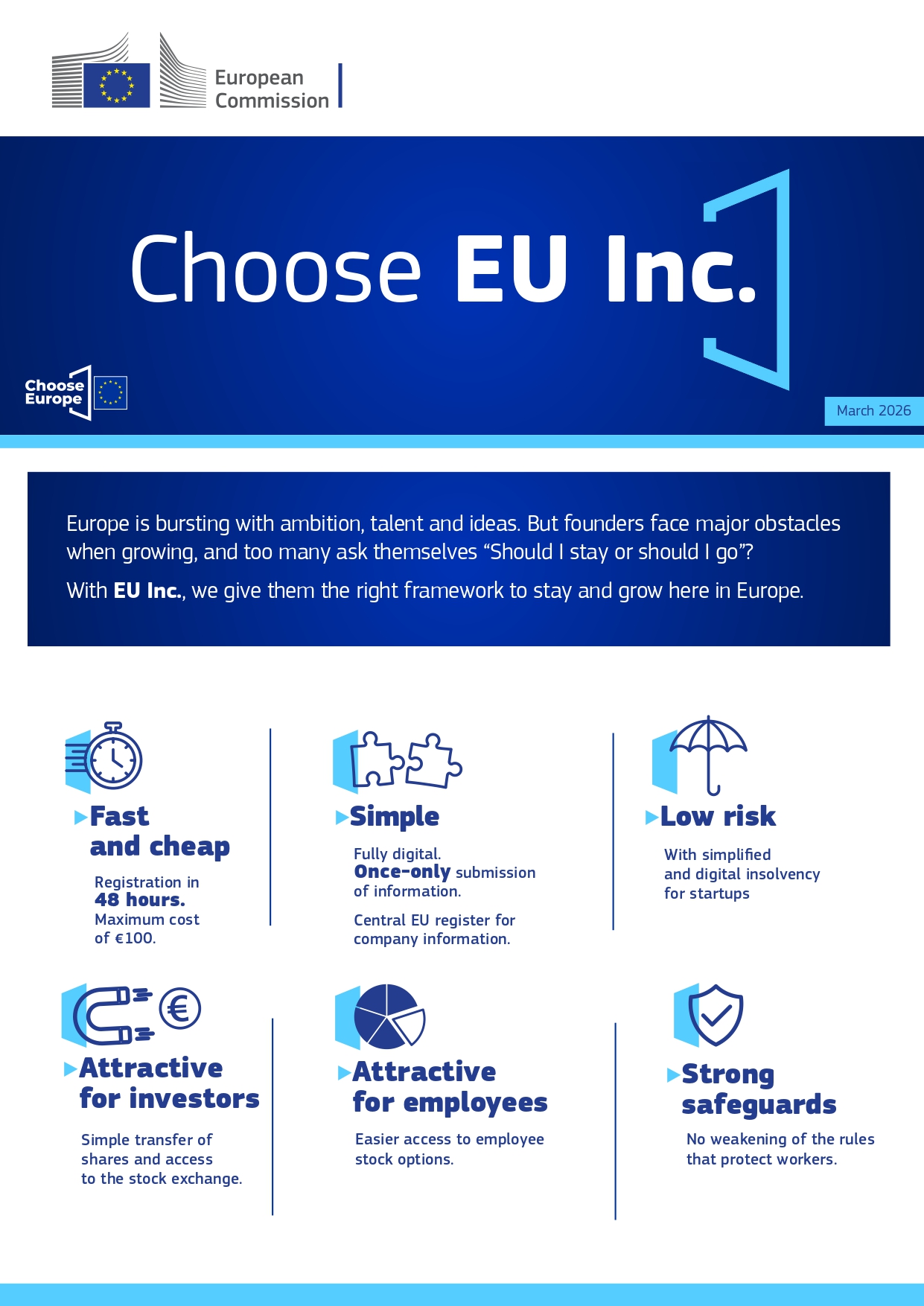
The greatest value of EU Inc. is that it simplifies the key stages of business, from its establishment to growth and further development.
The establishment of a company should be possible within 48 hours, at a maximum cost of 100 euros and without a minimum share capital.
Companies would only provide data once, via the EU Single Window, thus avoiding repeating the same documentation to different institutions.
The entire lifecycle of a company, from its creation to its management, would be digitalised. This also includes corporate processes such as decision-making, share management and communication with institutions.
Easier share transfers, standardised investment tools and the removal of administrative barriers will make it easier to attract investment, including from cross-border investors.
Measures are also envisaged to facilitate the attraction and retention of employees, such as more flexible reward models through stock options. Such models are already the standard in the startup environment, and could now become more accessible within the EU.
Simplified and digital insolvency procedures are foreseen, allowing entrepreneurs to recover and restart faster.
EU Inc. is not only a new form of company, but part of a broader package of measures by which the EU aims to strengthen the competitiveness of its economy.
In addition to this initiative, solutions are being developed for further digitalisation of business and public services, easier access to finance through the development of capital markets, greater talent mobility and simplification of the tax framework.
The aim is to create an environment in which businesses can operate and grow across the European Union without unnecessary barriers.
For entrepreneurs in Croatia, EU Inc. could Facilitate access to other EU markets without the need to establish separate companies in each country. This reduces costs and administrative burdens, but also speeds up the process of internationalisation.
In addition, easier access to investors and the wider labour market can be a significant stimulus for growth, especially for innovative companies and start-ups with the ambition of business internationalisation.
For entrepreneurs who think about growth outside national frameworks, this is an initiative that is definitely worth following.
EU Inc. is currently in the legislative process at European Union level, meaning that The proposal has yet to be negotiated between the European Parliament and the Member States in the Council of the EU.
It is these negotiations that will determine the final form and scope of application. While the idea of a single framework is broadly supported, open issues may include how Member States implement it, alignment with existing national legislations, and the level of digital readiness of individual systems.
It is important to underline that EU Inc. is proposed as a regulation, meaning that, once adopted, it would be directly applicable in all Member States, without the need for additional national laws. This increases its enforceability and uniformity.
The European Commission has set itself an ambitious goal, reaching a political agreement by the end of 2026.
For entrepreneurs, this means that EU Inc. is not yet an operational model, but it is a clear signal in which direction the business environment in the European Union is developing.

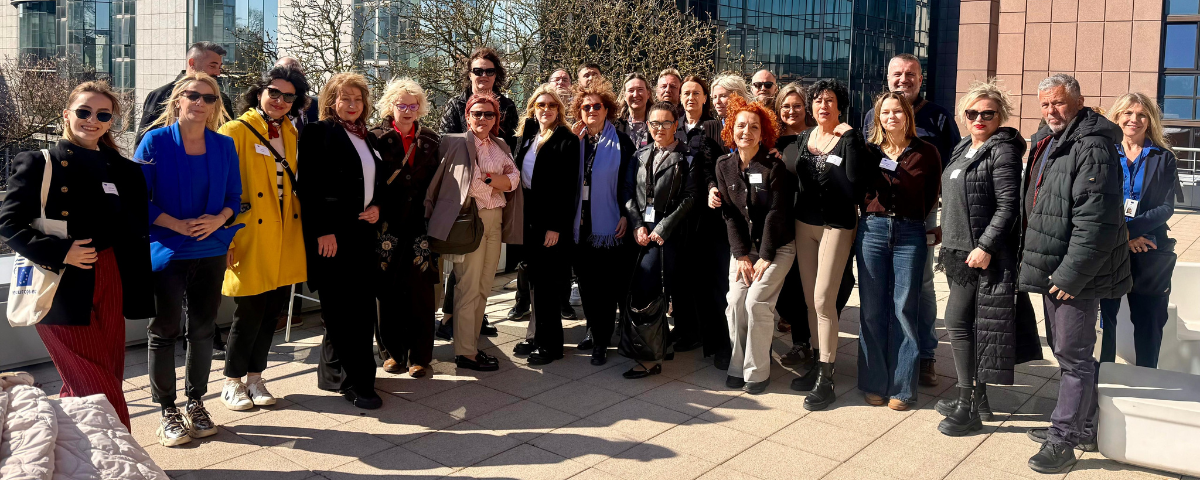
Organized by European Commission Representations in Croatia and with the support of our Europe Direct Rijeka, three well-known faces of the Rijeka media scene were selected for this visit, at the very heart of the European administration.
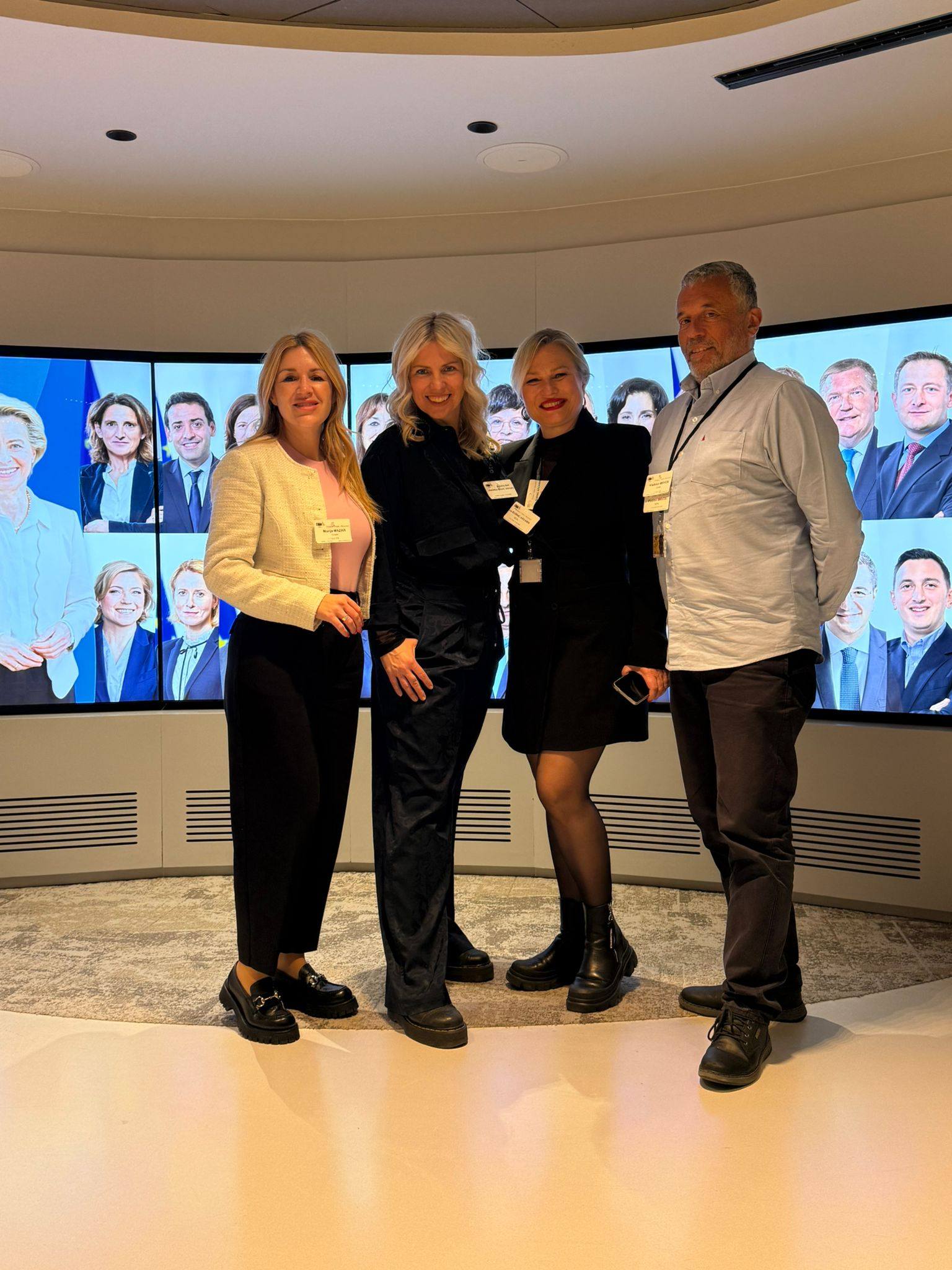
As top journalists who have been precisely and actively monitoring the activities of EU institutions for years, Vladimir Mrvoš (New sheet), Jana Bubnič Arčanin (Radio Korzo) and Marija Mažar (Stilueta) actively participated in a number of EU topics. While Mrvoš discussed topics of enlargement and digital politics analytically, Jasna Bubnič Arčanin captured the rhythm of European everyday life for the radio ether, and Marija Mažar recorded the impact of EU policies on lifestyle and local identity through the prism of contemporary communications.
The program began with an introductory speech. Andrea Čović Vidović, Deputy Head of the European Commission Representation in Croatia and Head of the Media Team. Marta Kos, the European Commissioner for Enlargement, spoke about the topics of EU enlargement. Journalists were also present. Midday briefing, daily media clash between Commission spokespersons and world correspondents. Rijekaanin Mateo Matijević, from the Cabinet of Magnus Brunner, Commissioner for Home Affairs and Migration, spoke about these important topics. Commissioner for Fisheries and Oceans, Costas Kadis, he outlined the vision of aquaculture, a topic of vital importance to our coast.
In the EU Parliament, journalists met with Croatian MPs: Nikolina Brnjac, which focused on tourism and transport, Tonino Picula, with which foreign policy and the ever-present issue of the enlargement of the Union have been scrutinised, and Davor Ivo Stern, who spoke about the situation in the Western Balkans and South America, topics for which he is in charge in the EU Parliament.
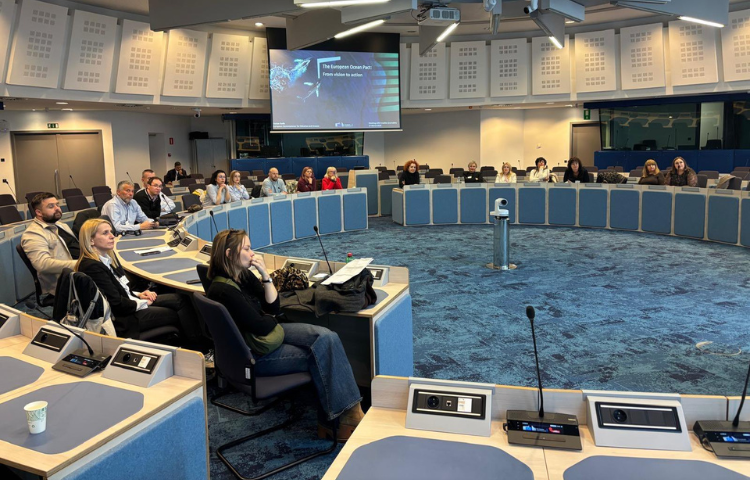
‘Two days in Brussels were an extremely valuable experience for me and an opportunity to see the topics that are currently in the focus of the European Union. I would like to single out a lecture by MEP Nikolina Brnjac on affordable housing, Tonino Picula on migration and the current geopolitical situation, and Davor Ivo Stier. Particularly valuable was the opportunity to discuss and better understand the processes behind European decisions. I would like to thank everyone for their quality and content lectures, as well as Europe Direct Rijeka, which enabled me to make this journalistic journey.“ — Jana Bubnič Arčanin, Radio Korzo
The European Economic and Social Committee's programme is also presented as an EU advisory body that issues opinions addressed to other EU institutions. The SGSC is an advisory body that provides representatives of European social and professional interest groups and others with a formal platform through which they can express their views on EU matters. Its opinions are addressed to the Council, the European Commission and the European Parliament, giving it a key role in the Union's decision-making process. The continuation of the programme was reserved for discussions on social inclusion with Katarina Ivanković-Knežević and on a digitally resilient transport system with Maja Bakran Marcich.
This journalistic-study visit once again confirmed that while decisions are taken in Brussels, their interpretation and application at local level are crucial for understanding the European project.
“It is now much clearer to me how the European Union works. Never, as today, have I understood the geopolitical challenges and trends, unfortunately the turmoil we are witnessing. Being at the source of information, at the place where decisions and changes come from, and even very briefly, is really interesting and useful to me. Thanks again to Europe Direct Rijeka and the European Commission in Croatia for being on this list with colleagues from all over Croatia.” – Mary the Magi, Stilueta
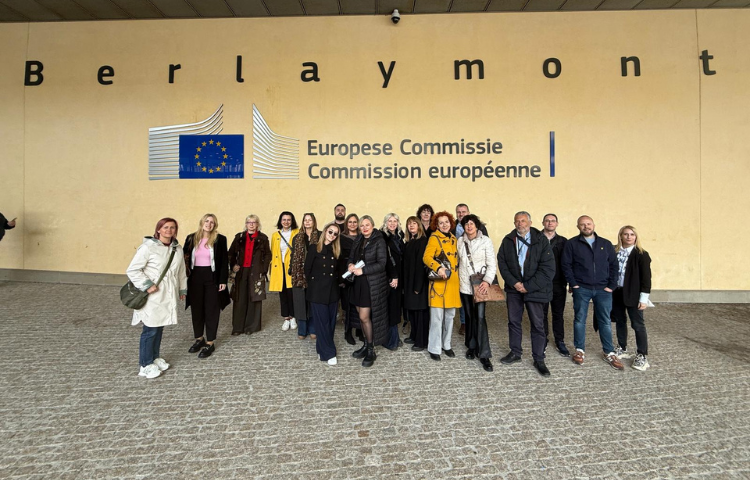
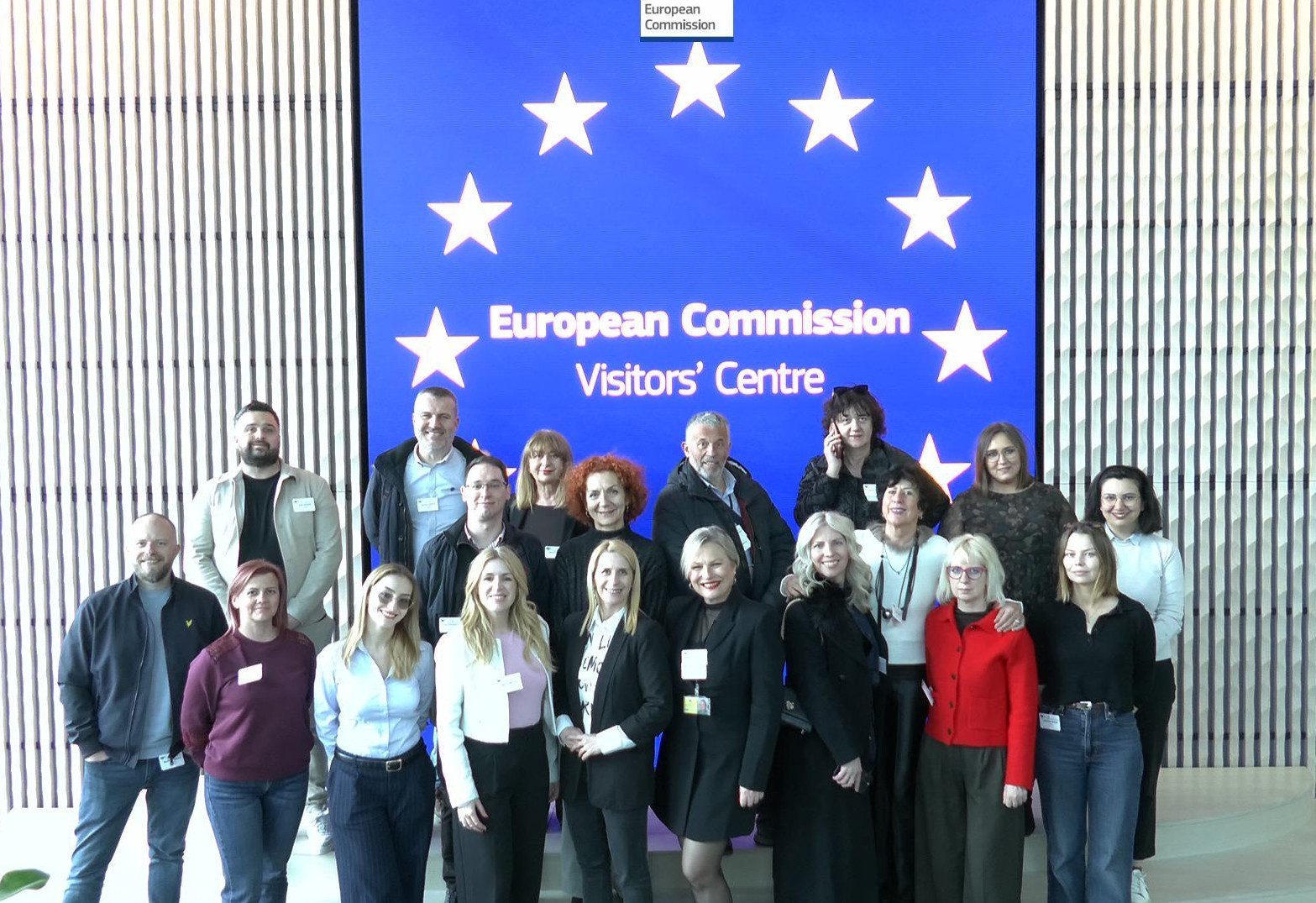
“Participating in a study visit to the European Commission and other key EU institutions in Brussels was an invaluable professional and academic experience for me. As a journalist, but also a doctoral student in the field of international and European law, this stay provided me with a unique insight into the complex mechanisms of current EU policy and directly prepared me for understanding the new legislative guidelines that will shape our future. I would particularly like to highlight the programme designed by Andrea Čović Vidović, Deputy Head of the European Commission Representation in Croatia and Head of the Media Team. The programme was set at an extremely high level, allowing us to have open, meaningful and, most importantly, off the record conversations with a number of influential actors from the very heart of European politics. Such a level of direct communication with decision-makers is a rare opportunity that enables an in-depth understanding of the behind-the-scenes process. Such study visits are crucial for people dealing with European topics professionally, either through the media or through professional-scientific work. By gaining a broader picture of the situation in the Union, we, as experts, become equal interlocutors in discussions on topics that directly define European standards and policy. Only through this direct exchange of knowledge and experience can we credibly and convincingly follow and interpret the direction in which the European Union is developing.” – Vladimir Mrvoš, New List
Croatian Agency for SMEs, Innovations and Investments (HAMAG-BICRO) in cooperation with the Ministry of Economy and the Ministry of Finance, re-opened the Investment Loans programme from National Recovery and Resilience Plan (NRRP).
Entrepreneurs are available in total €10 million, and the funds are allocated until the allocation is used up, which means that the speed of the application will be crucial.
The loan is primarily intended for investments, with the possibility of using up to 30% working capital.
Eligible investments shall include projects contributing to:
The instrument aims to boost investments that strengthen the competitiveness and resilience of businesses, with a focus on the green and digital transitions.
Loans are intended for small business entities which:
In addition, the project must be economically justified and comply with the EU "do no significant harm" principle.
It is important to point out that the right to a loan is not automatic. The approval decision shall be made on the basis of an assessment of the viability of the project and the creditworthiness of the undertaking.
The full programme with detailed conditions, eligibility criteria, list of documentation and application instructions is available here.