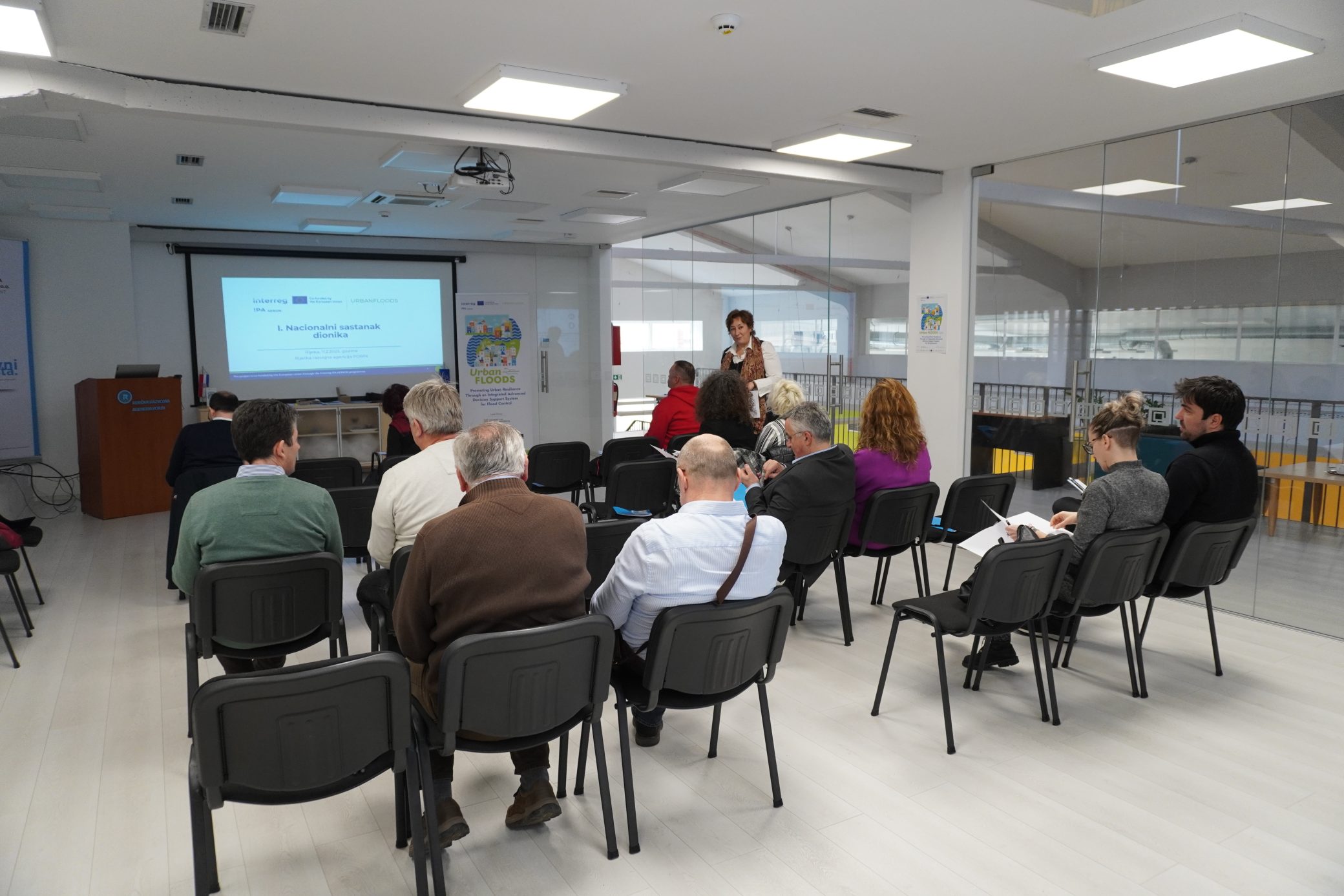
On the 11th. 2. In 2025, accidentally or not, on the Day of the Single European Emergency Number 112, in person and online, more than twenty participants gathered at the 1st National Meeting of Project Stakeholders URBANFLOODS, initiatives aimed at strengthening urban resilience to the increasing flood threat.
The meeting, which we hosted, brought together experts, local authorities and national stakeholders from different sectors (civil protection, environmental protection, water management, geodetic institute, spatial planning and construction, Croatian Meteorological and Hydrological Institute, etc.) to discuss flood management strategies and exchange insights on urban resilience in Croatia and the Adriatic-Ionian region. The meeting provided a detailed insight into the work plan of the project and its progress so far.
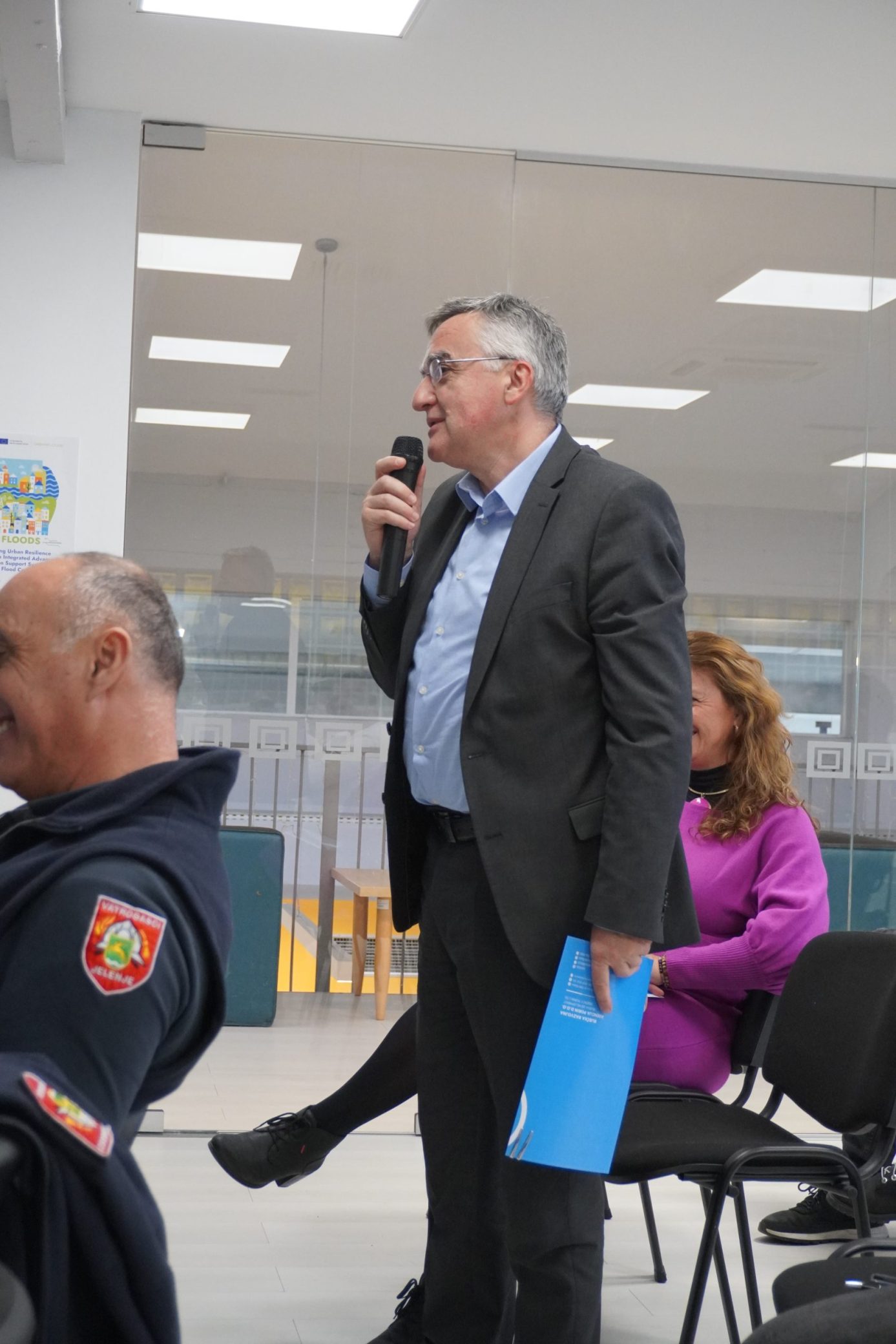
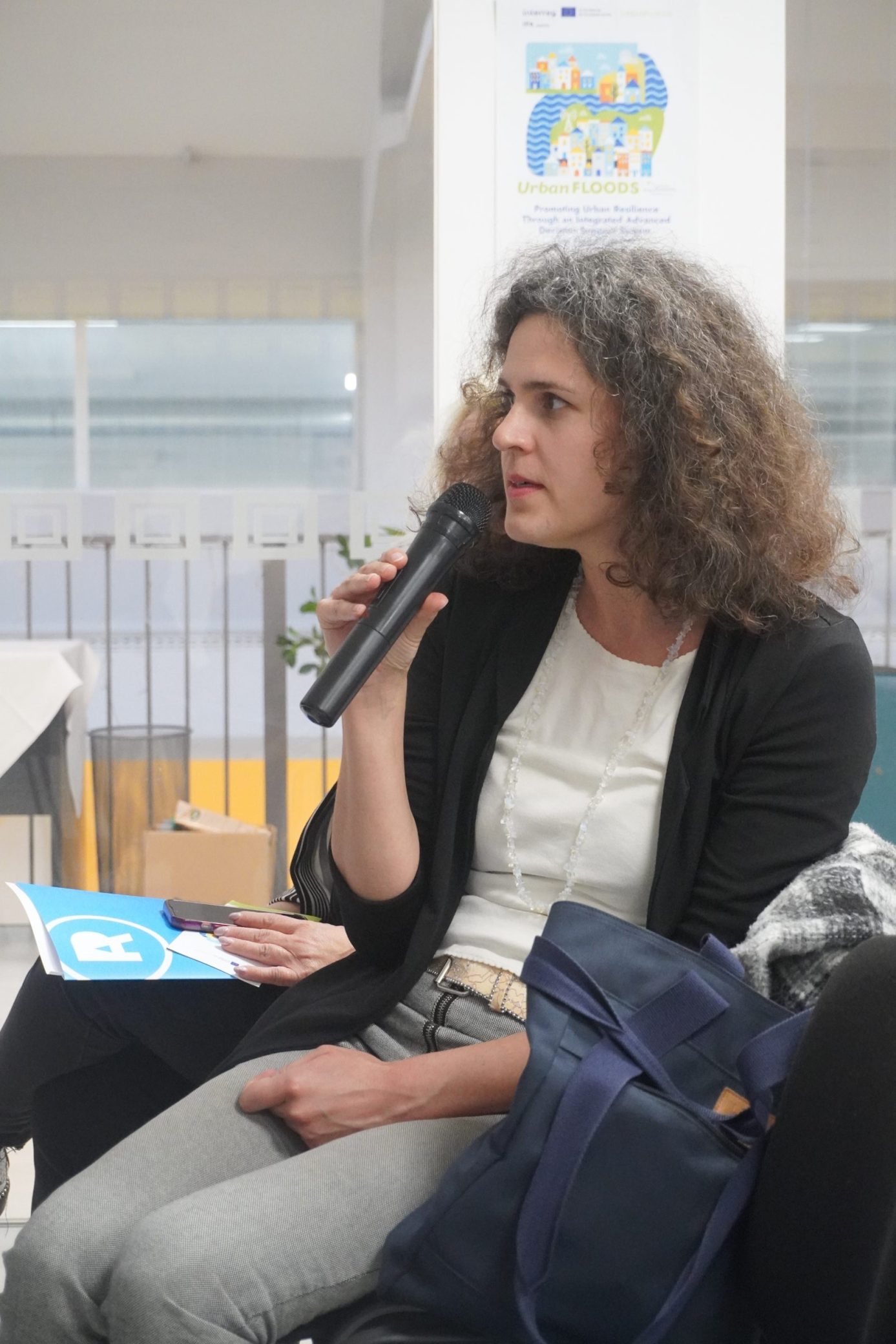
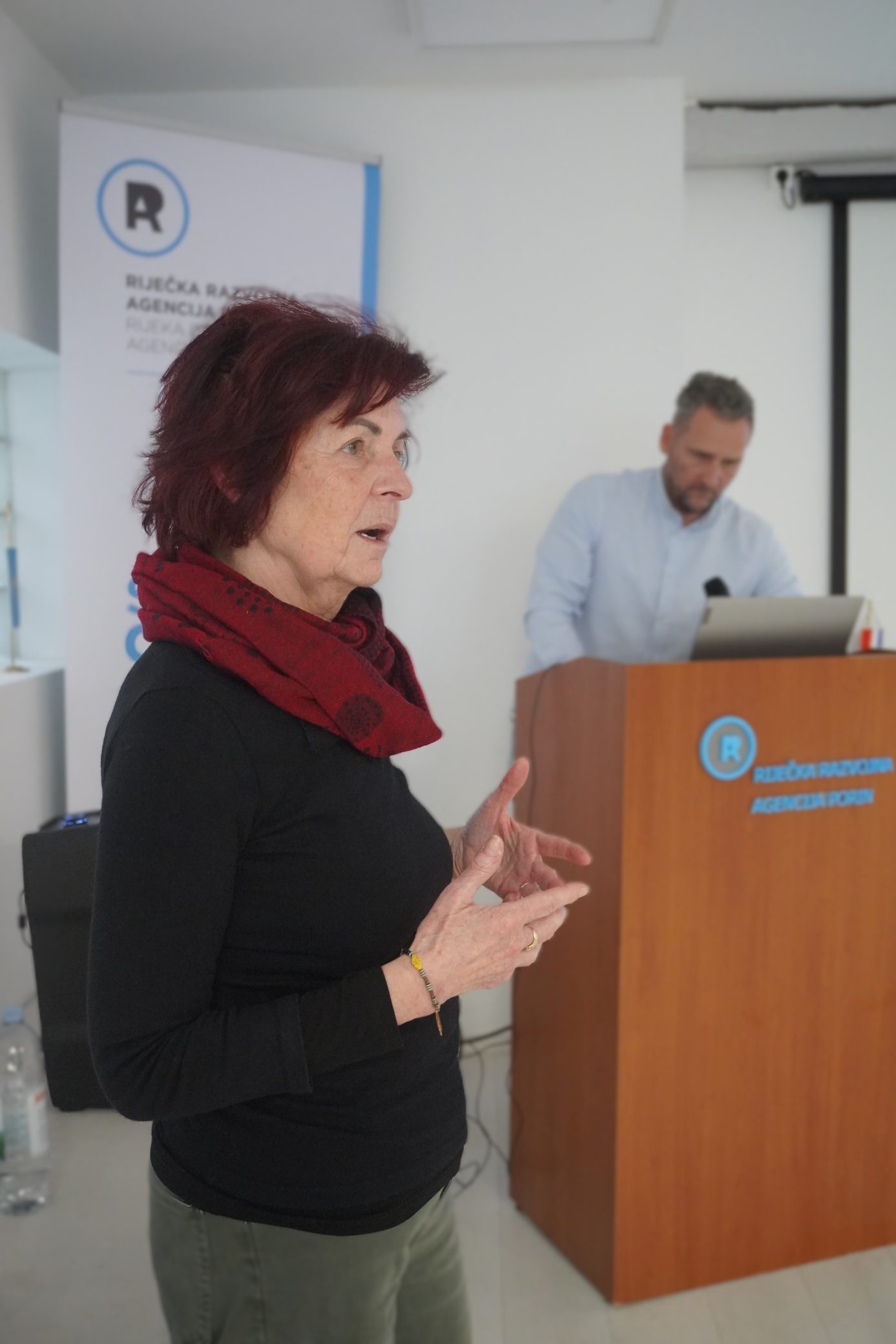
Key areas in the focus of the URBANFLOODS project include raising public awareness, recommending public policies for flood prevention and developing action plans to protect urban areas from future floods. Project partners from Albania, Bosnia and Herzegovina, Croatia, Greece, Italy, North Macedonia, Serbia and Slovenia are working together to make these goals a reality. By creating an integrated decision support system (DSS) based on the EU Floods Directives, the URBANFLOODS project aims to transform flood management, improve response readiness and increase resilience in cities across the region.
Furthermore, the presentation of a test (pilot) area for the city of Rijeka – the lower course of the river Rječina, which will serve as a model for flood risk simulations, initiated an interesting discussion between local and national stakeholders on institutional roles and responsibilities. Prof. dr. sc. Nino Krvavica from the Faculty of Civil Engineering - Institute of Hydrotechnics u Rijeka, led the session, providing valuable insights from his experience on the use of data needed for the digital model for flood management and the applicability of current national policies related to flood reporting and mitigation in practice.
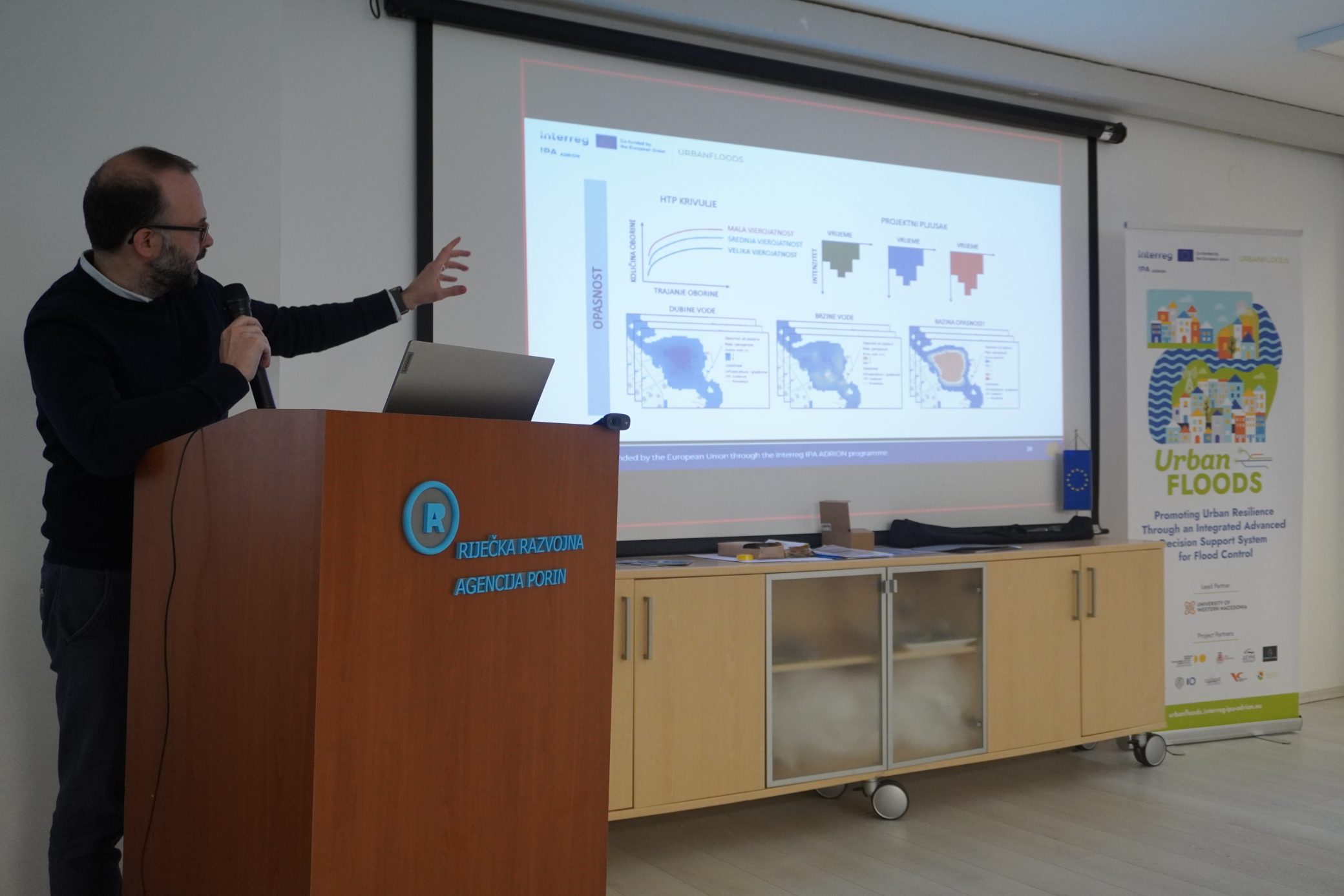
The first national stakeholder meeting marked an important step forward with the implementation of the URBANFLOODS project, where the contribution of the participants is crucial for the finalisation of the National Report for Croatia on a common knowledge base on current flood prevention and mitigation policies and measures.
URBANFLOODS is financed by INTERREG, with a total budget of EUR 1.75 million, of which EUR 1.49 million is provided by EU funds. The project, which lasts three years, is expected to have a lasting impact on the region’s ability to respond to and manage flood risks.