How can cities recognise flood risk earlier, react faster and make better decisions in crisis situations?
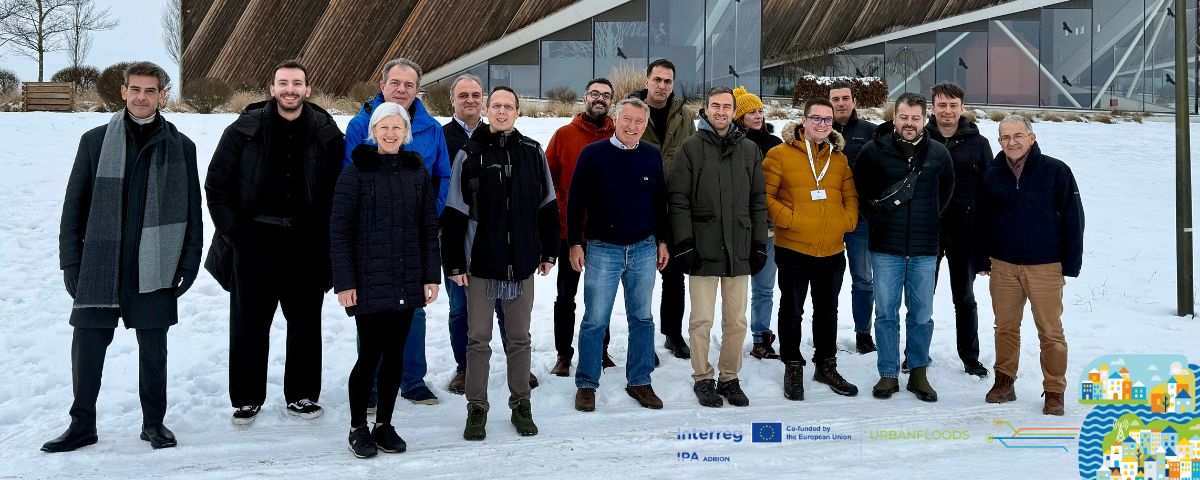
These were the key issues of the third transnational project meeting. URBANFLOODS, held on 21 and 22 January 2026 in Murska Sobota. The meeting was not just an exchange of information between partners, but a concrete step towards solutions to be used in the cities involved in the project.
From data to decisions
The main focus of the meeting was the progress in the development of an integrated decision support system, a tool that allows cities to assess urban flood risks and plan protection measures based on data.
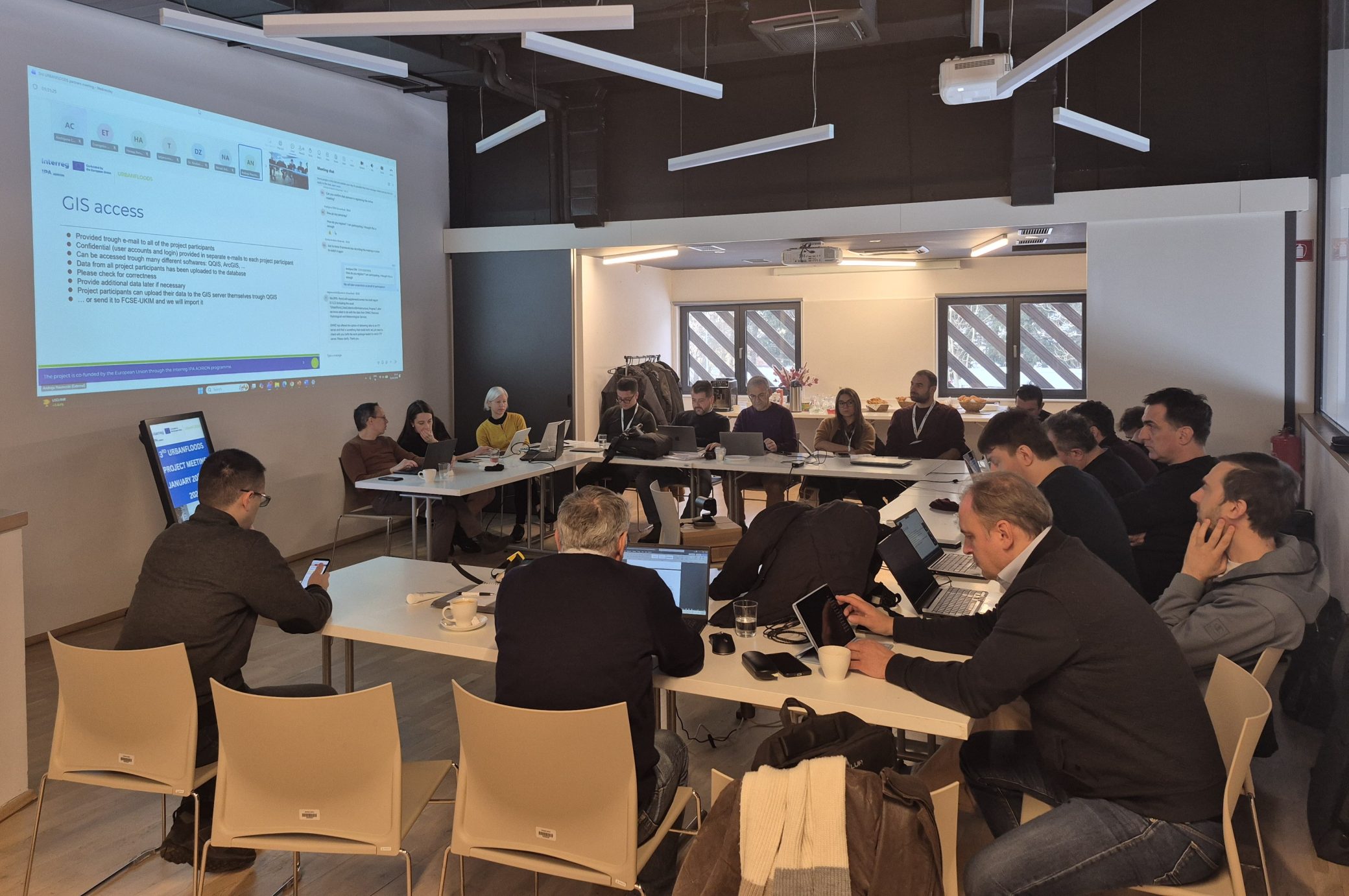
Partners compared data collected at pilot sites, identified challenges in modelling flood scenarios, harmonised approaches so that solutions could be applied in different urban contexts. In other words, the project is at a stage where the technology is starting to get very concrete application in practice.
Particular emphasis was placed on the GIS database and data standardisation. Without common standards, solutions developed in one city are difficult to apply in another. That is why this step is crucial for the long-term value of the project. The aim is not an isolated solution, but a tool that can be adapted to the different cities in the region.
In addition to technical developments, the meeting confirmed the importance of knowledge exchange and long-term cooperation. In this context, the further development of the URBANFLOODS KNOWBASE platform, conceived as a common space for the exchange of experiences, data and good practices among cities and experts, was presented.
What's next?
The meeting clearly defined:
- the next development steps of the DSS system,
- deadlines for delivery of project results,
- a plan for future activities and meetings.
A study visit to local good practice examples further helped partners to link theoretical solutions to real urban challenges.
Why is this important?
URBANFLOODS brings together partners from eight countries with a clear objective: increase urban flood resilience through smart, data-driven solutions. The third partnership meeting showed that the project goes beyond plans and strategies towards tools that cities will be able to use in their day-to-day risk management and climate change adaptation.