Except in the holiday season, this sixth edition of the traditional event Torpedo Days, passed in spirit green transition!

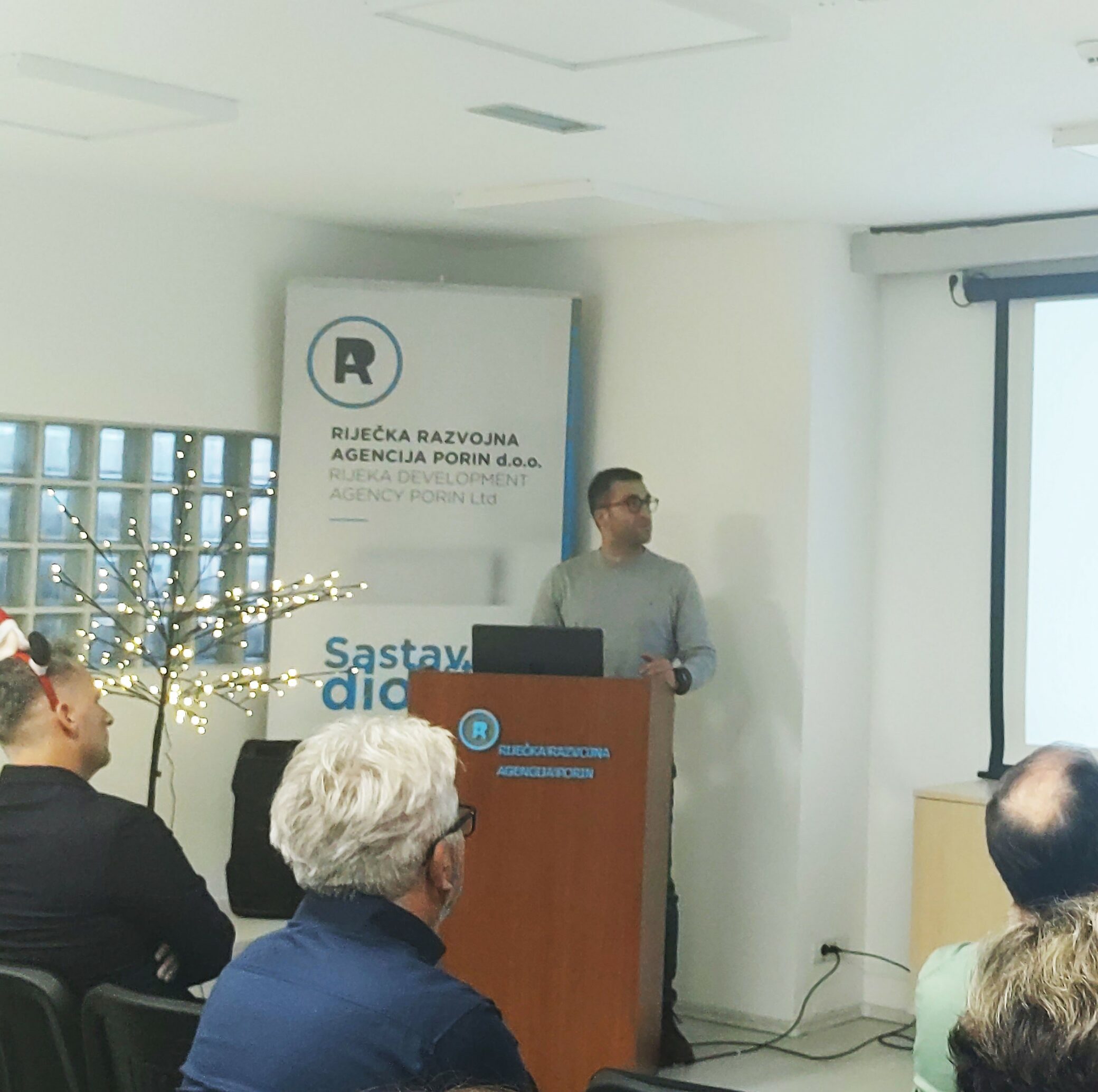
Through the two-hour program Torpedo Days 06, as many as 8 local initiatives launched by public and private sector actors were presented. Although different profiles, all lecturers are linked through the same topics and goals: energy efficiency, circular economy, energy savings and sustainable development. This edition of Torpedo Days we organized with the City of Rijeka, Smart Rithe Center EUROPE DIRECT Rijeka.
The participants of the event, in the filled hall of the Torpedo Production Park, could hear what is being done in the wider Rijeka area in terms of waste separation, development of energy communities, energy management, savings and bill reduction, application of green solutions in shipbuilding, development of green startup and many others.
Ana Jerković from EUROPE DIRECT Rijeka introductoryly mentioned the obvious presence of climate change and extreme weather conditions to which we are also exposed in Rijeka. In addition to climate change, rising energy costs and energy insecurity have also spurred the creation of the European Green Deal and its RePowerEU part, which aim to boost the economy through green technology and reduce dependence on fossil fuels through the clean energy transition. And the New European Bauhaus initiative was also launched to maximise the involvement of citizens in the green transition.
He welcomed the gathered and thanked the newly elected director of the Rijeka Development Agency Porin for his great response. Nenad Antolović.

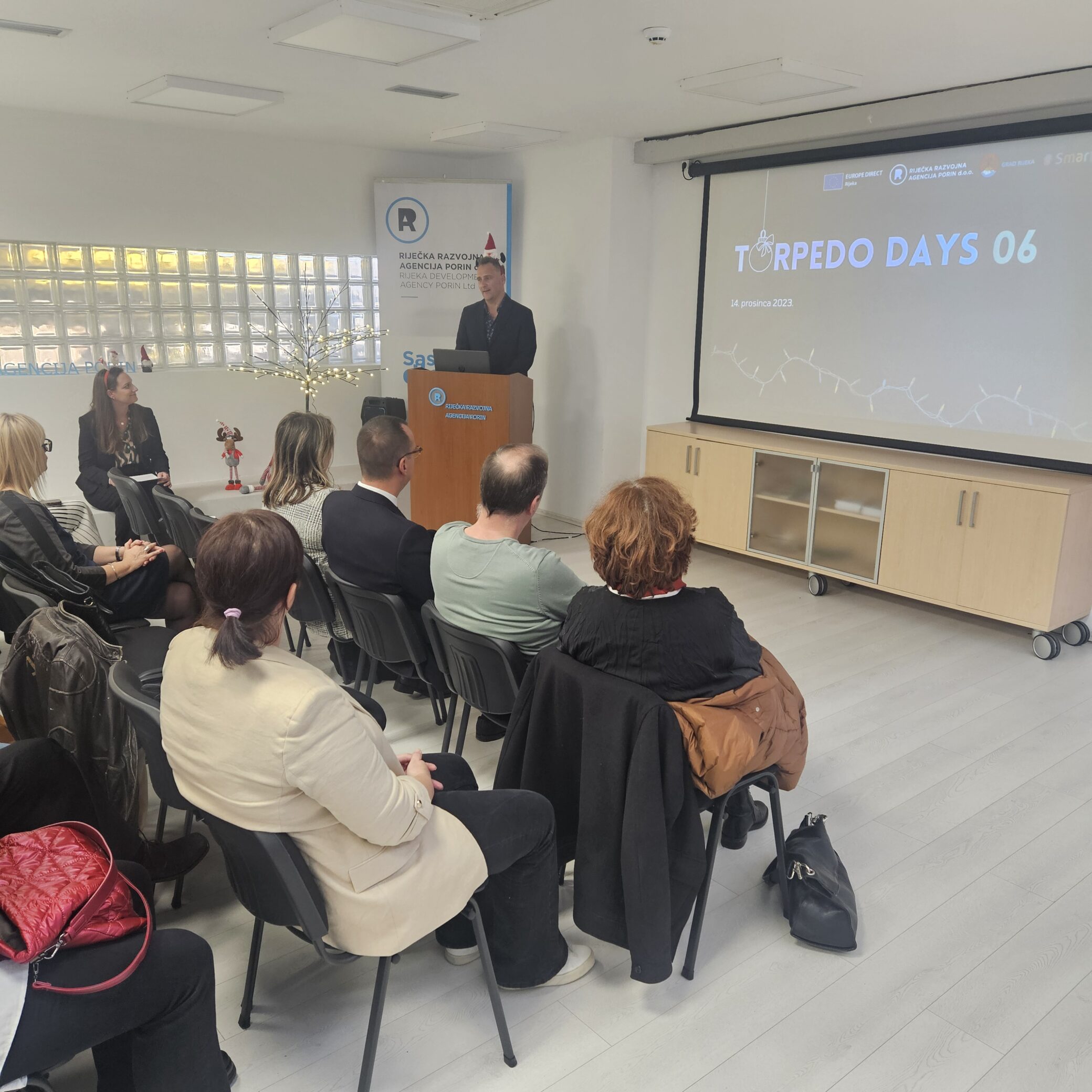
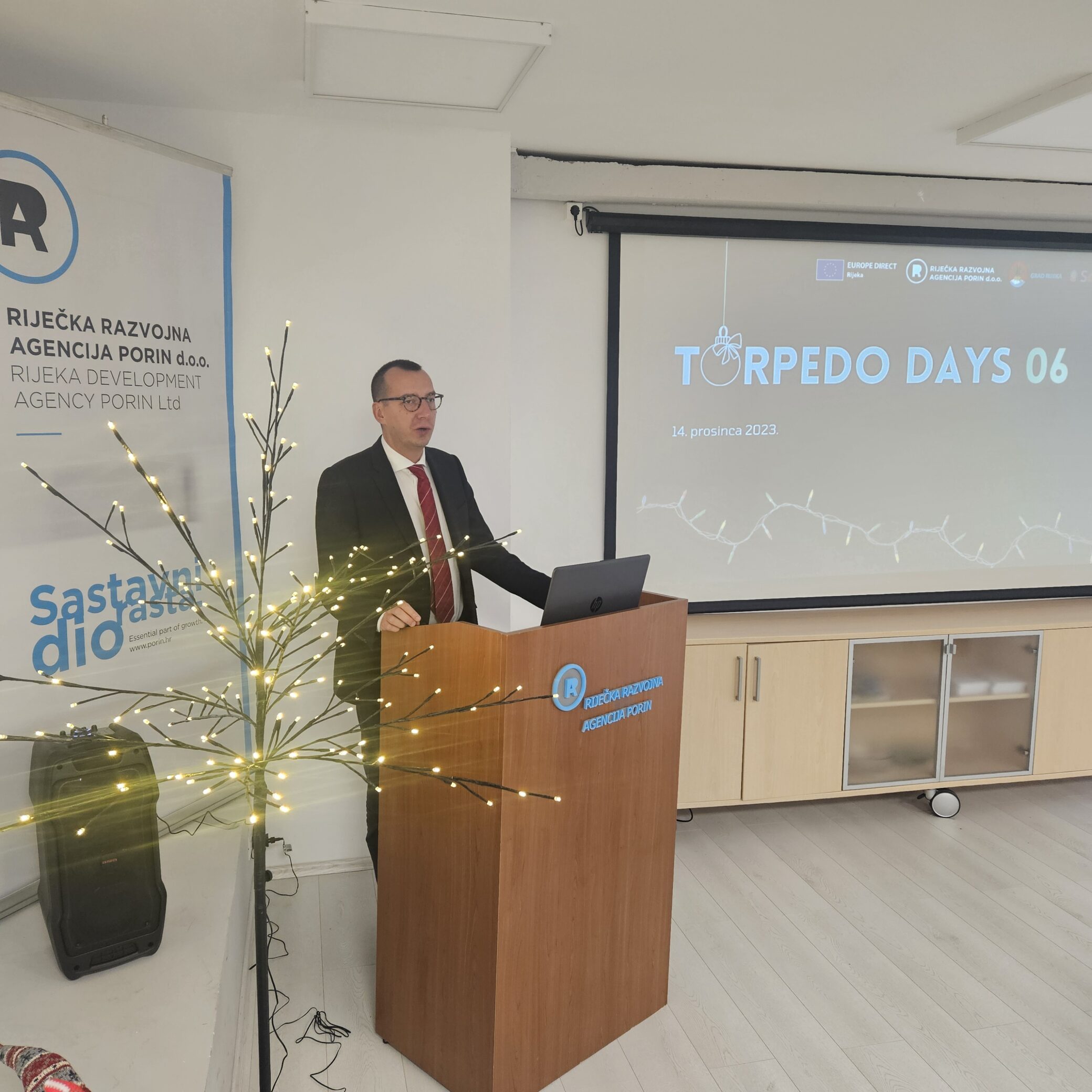
Introductory greetings were also given by the Mayor of the City of Rijeka, Marko Filipović stressing the fact that we are in challenging times of energy uncertainty in which Rijeka continuously and proactively adapts to new standards of resource management.
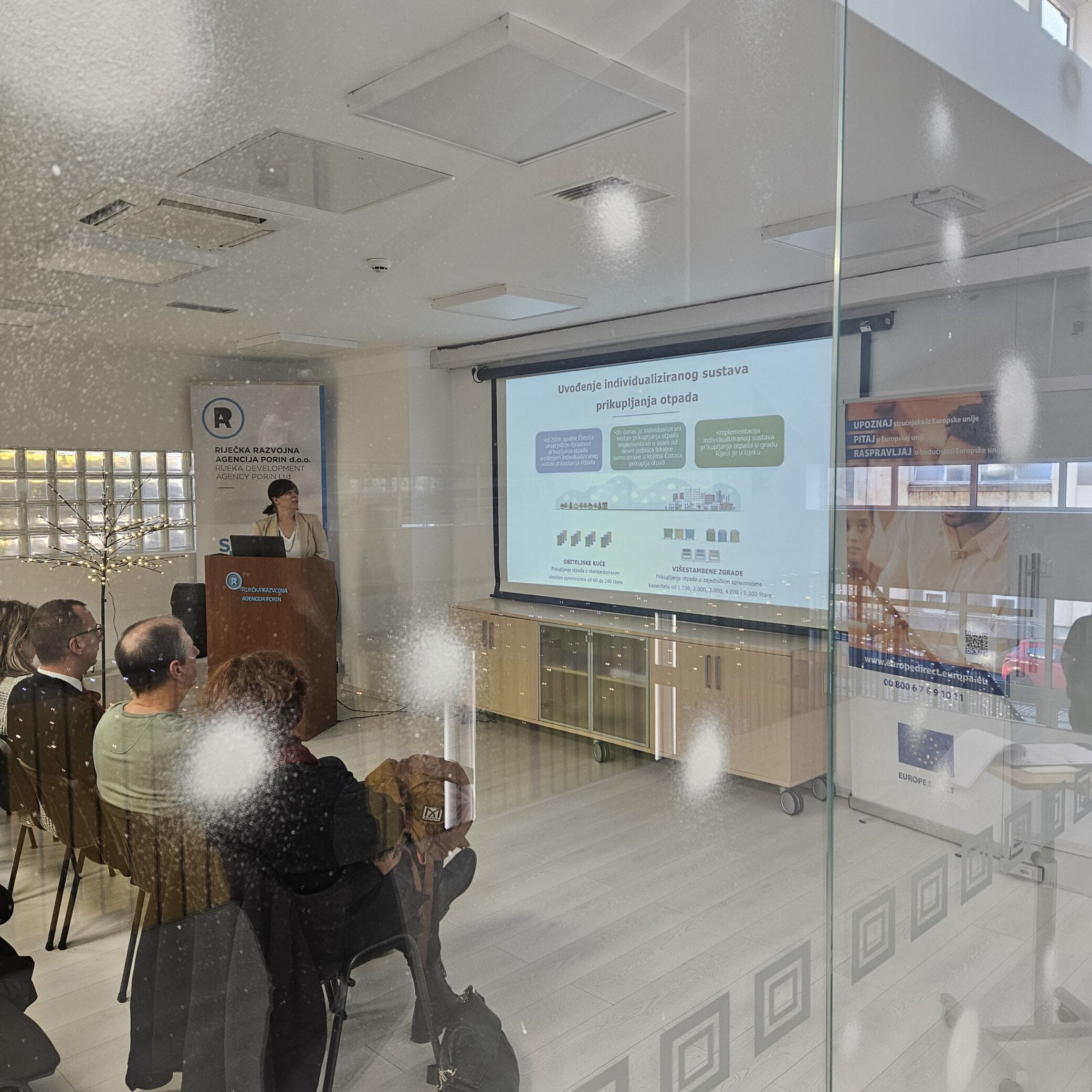
One of the burning topics, not only in Rijeka but also beyond, was presented by Danijela Matejčić Miletić from the Municipal Society of Cleanliness – efficient and sustainable waste management. Matejčić Miletić spoke about the systematic introduction of ‘Door-to-door waste collection“ which is introduced successively in the Rijeka area by city councils and includes the disposal of waste through individual containers for family houses and through joint containers accessible to residents of multi-apartment buildings. As a valuable initiative of KD Čistoća, which is entering its fifth year of work, Matejčić Miletić also mentioned Rijeka's Riperaj – A functional space where citizens can repair DIY objects and devices free of charge.
Involving citizens in the reflection and work on creating an energy-sustainable environment was the topic of the lecture. Damir Medved from the North Adriatic Energy Community. Presenting the concept of energy communities as a contribution to the fight against energy poverty, Medved touched on the devastating data on the percentage of the population that belongs to the energy poor citizens, both in Europe and in Croatia. The establishment of energy communities based on voluntary and open participation brings environmental, economic or social benefits to members, without generating financial gain. Although regulations are in force on the basis of which it is possible to establish an adequate energy community, and the technological solutions needed for this process are increasingly cheaper and more accessible every day, in practice there are a number of issues related to its legal operational operations, which the North Adriatic Energy Community systematically tries to solve.

Tajana Jukić Neznanović from the City of Rijeka followed up on the issue of rational management of resource consumption and presented a number of initiatives in which the City of Rijeka was officially involved. Since 2009, the City of Rijeka has been a signatory of the European initiative, the Covenant of Mayors, which was launched in 2008 by the European Commission with the aim of involving and supporting mayors in achieving the climate and energy goals of the European Union. In October 2015, two initiatives, the Covenant of Mayors and the Adaptation of Mayors, were officially merged into an initiative. Covenant of Mayors for Climate and Energy. The new initiative supports the achievement of the goal reducing greenhouse gas emissions by 40% by 2030, adopting an integrated approach to climate change mitigation and adaptation and ensuring access to secure, sustainable and affordable energy for all.


Suzana Belošević Romac, also from the City of Rijeka presented the project Re-value – a project inspired by the NEB aesthetic approach to sustainability in support of the EU Mission on Climate-Neutral and Smart Cities, which took a holistic approach to urban development taking into account not only physical infrastructure but also the well-being of communities while setting the path towards achieving climate neutrality in urban areas.
Rijeka was also a test site for the development of products and services of the CEKOM – Competence Centre for Smart Cities project for 3 years. Although technologically intensive, the CEKOM project for smart cities has continuously worked on educating and involving citizens in its activities. One such activity, aimed at introducing the concept of gamification in encouraging citizens to act responsibly towards energy consumption, was presented by Emira Brkić Karninčić from Smart RI. The project included elementary school students from Rijeka who solved certain problems related to sustainability and ecology with creative challenges.

Along with the City of Rijeka and the University of Rijeka, the emphasis in its development is on sustainable development, so Ida Križaj Leko from DeltaLab-a presented the project the Heavy Campus. The project is part of a wider strategic project of the University of Rijeka aimed at improving infrastructural and human capacities with an emphasis on ensuring sustainable development and green transition and raising the quality of study and student standard at the University.

On the side of the private sector are represented two companies, Lürssen Design Center Kvarner i Dražen Debelić, which presented technological solutions for the green and digital transition of shipbuilding with a focus on the use of green hydrogen as propellant for vessels, and Philip Hatcher, a representative of the company Terra Nera, the second-placed team of the 12th generation Startup Incubator Rijeka, who explained to the gathered how ecology can become a lucrative business.