If you've ever tried to explain to your grandmother (or any member of the older generation) that you're freelancer, There's a good chance you've heard something like that.
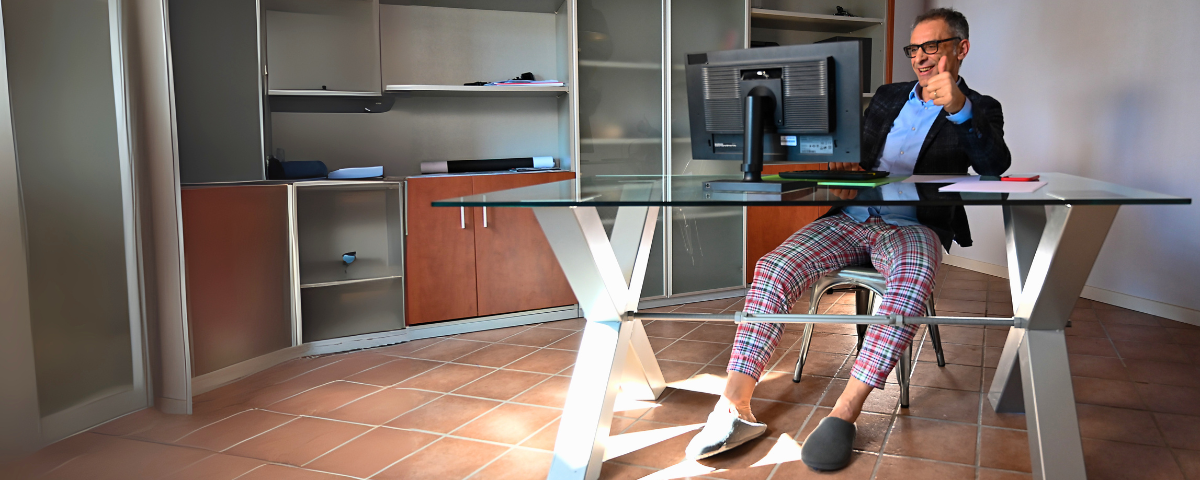
Freelance career, although more and more common among young people, still sounds to many as a phase between looking for a "real job" and what adults actually do. But freelancing It's not just clicking on the keyboard in pajamas. It is a serious (and often very demanding) way of working with a lot of freedom, but also even more responsibility.
Free what?
Freelancer independently provides services to different clients, without permanent employment in a single company. Doing projects, not going to work. He searches for clients himself, he negotiates the price himself, he works when and how it suits him (in theory). This can include everything from writing, design, translation, programming, consulting, education, to cake making or digital marketing.
A problem?
Grandma still thinks in the categories: either you're employed, or you're unemployed. Boss, firm, opening hours. If she doesn't, she's confused.
How to simplify the explanation?
Examples from everyday life can help:
You know what people call a plumber when something's leaking? Well, they call me when their website leaks.
I don't go to one company every day, but I work for more than one of them from home – like when your hairdresser goes home to cut hair.
I work ‘to-piece’ – like when someone orders a pie and you make and sell.
What worries Grandma the most?
Do you have pension and health care? – Yes, this can be settled, but it is not the time to explain the difference between the flat rate, the contract and the contribution.
What if no one gives you a job? – Well, that's a real concern. Freelancers are constantly looking for opportunities, building a network and investing in a personal brand.
You work all day, and you don't have a boss? – This is true. You are the boss of yourself, which means that freedom comes with great responsibility.
Why freelancing Still worth it?
Freelancing brings flexibility, the ability to select projects and clients, control over time and work environment. But it also comes with challenges: unsafe and irregular income, constant need for learning and responsibility for every part of the business.
Grandma may not fully understand this, but when she sees that you are not coming to her lunch, that your phone is ringing all the time and that “you are typing something on your computer all the time”, she may still conclude that there is something serious about it.
And once you pay for her lunch at an online restaurant, she may even start bragging to her neighbours about how you work ‘over your buddies’.
Our goal is your success. Together, we shape sustainable solutions and create the foundations for growth, competitiveness and innovation.
Plus: Flexibility, no crowds. Minus: Cat on the keyboard, forgotten lunch.
Working from home sounds like a dream. There's no traffic jam, you work in pajamas, and coffee is exactly what you like. But when the business world moves to your living room, the situation can become more challenging than it seems at first glance.
Entrepreneurs working from home often struggle with the demarcation of private and business. Borders blur quickly and the feeling of being ‘always at work’ becomes real.
Flexibility or Chaos
One of the biggest advantages of working from home is flexibility. You organize the day as you like, breaks when you want, clothes of your choice. But that same flexibility easily slips into chaos without a clear routine.
Advice: Set clear working hours. Even when working from the living room, try to mentally (and physically) separate the space for work from the space for relaxation.
Isolation vs. cooperation
Communication goes through Zoom, Slack and Teams, but physical contact is missing. Loneliness, reduced cooperation and the feeling that "you have to do everything alone" can be easily retracted.
Advice: Plan regular virtual meetings with the team and colleagues. Informal conversations, even over the screen, help preserve the team spirit.
Self-master and employee
Motivation can be challenging when there's no one to watch you. Delaying tasks and lack of focus easily occur when you are your own boss and sole employee.
Advice: Set goals (daily, weekly, monthly) and use tools like Trello or Asana. And yes - small rewards after the work done do wonders.
Productivity in slippers
Working from home means more distractions, from housework to a refrigerator called by name. Without a physical transition to "working mode", the focus can disappear quickly.
Advice: Separate the space just for work, no matter how small it may be. A ritual such as ‘shifting out of your pajamas’ helps your brain recognise the start of your working day.
Reconciliation of private and business
When your office is in the living room, it's hard to separate private from business. Family, partner, pets – everyone thinks you are ‘available’, even though you are actually in a meeting.
Advice: Communicate clearly when you work. The routine of the beginning and the end of the working day helps you not to burn and that your people know when to distract you.
Technical challenges
Slow internet, power outages, mess with tools... technology can make your day easier or more complicated.
Advice: Invest in good equipment and stable connection. Learn the basics of digital tools and update them regularly, your business depends on it.
Creativity in solitude
When you're buried in an operation, it's hard to think strategically. And that's exactly what you need, especially if you're a solo entrepreneur.
Advice: Leave room for thought. Go for a walk, write down ideas, sometimes just sit down and do nothing. Creative sparkles love silence.
Our goal is your success. Together, we shape sustainable solutions and create the foundations for growth, competitiveness and innovation.
The twin has three ideas before breakfast, but he doesn't finish any without coffee. Cancer would rather work from home, in pajamas, with a team he loves as a family. The lion likes to be the boss. And an influencer. And that's what everybody tells him. Capricorn is the CEO of kindergarten, already at that time he had an Excel table for pocket money.
And you? Are you a visionary like Aquarius, a perfectionist like Virgo, or maybe chaotic genius like Gemini? In front of you is a fun view of personal leadership styles, without a crystal ball. We don't guarantee business success, but maybe we'll give you a new insight into your own entrepreneurial mindset.
Aries - First at the start
Full of energy and ideas. He's not waiting for things to move, he's running them. He always does, invents, creates and solves something. He does not like to listen to other people's orders and is rarely a team player, he wants to lead. He's impulsive, brave, and risk-prone. Gives 100% himself, but if his job gets boring, his fire goes out quickly.
Business Virtue: Quick decision-making and courage
Possible challenge: Skip planning and details
Advice: Slow down and think, planning can help reduce risk.
Taurus - Stable as the foundation of a company
Reliable, patient and thorough, Taurus builds a business step by step. It works diligently and will not stop until it achieves stability and security. It's great at managing finances and it doesn't take off, every move has to make sense. He thinks long-term and not to be easily shaken.
Business virtue: Financial wisdom and perseverance
Challenge: Resisting change and risk
Advice: Safety is important but growth comes outside the comfort zone.
Gemini - Chaotic genius
He has three new ideas before breakfast. Gemini tends to a dynamic working environment, routine chokes it. He's a great player in teamwork and networking. It was created for multitasking, problem solving and reviving new ideas. He needs a job that won't hold him back and limit him to just one task.
Business virtue: Creativity and adaptability
Possible challenge: Lack of focus
Advice: Focus energy – a genius idea is valid only when it is implemented to the end.
Cancer - Soul of the team
Cancer is intuitive, emotional and is often guided by a sense of what is best for its clients or team. Entrepreneurship for him is not just a job, but an opportunity to contribute to the community and create something with the soul. His leadership style is based on intuition, caring for people and feeling safe. He's happiest when he works from home comfort. He is reliable, committed and incredibly valuable.
Business virtue: Intuition and care for the team
Possible challenge: Emotional overload in decision-making
Advice: Sometimes it is important to listen to logic, especially when making business decisions.
Leo - Leader under spotlights
The lion is a natural boss and does not like to have superiors who control him. He likes to be in the center of attention, not because of the ego, but because he can inspire. Its energy is contagious, and its leadership style is naturally dominant and motivating. He knows how to attract attention and make an impression. He's focused on himself, so he often builds a brand around his personality and forgets about it.
Business virtue: Charisma and Ambition
Possible challenge: Egocentricity and the need for recognition
Advice: Show greatness and support to others – success also comes from cooperation, not just from splendour.
Virgin - Queen of Orders
The Virgin is the queen of order and detail. Analytic, organized and perfectionist by nature, in business leaves nothing to chance and expects perfection. Tables, lists… everything is under control. He's probably been running KPI tables since the idea phase. Quality, efficiency and precision are sacred to her. The Virgin knows how to rationally manage the budget and will always choose practical, sustainable solutions.
Business virtue: Organisation and quality
Possible challenge: Perfectionism that hinders
Advice: Let things flow, "almost" is better than "perfect but never launched".
Balance – Golden mean
The scales bring harmony into the team, into the office, into the negotiating room. It has the natural ability to connect people and create win-win situation. Charming and just, she tries to hear all sides and build harmony in the work environment, sometimes too much. It works well in the team and people love it, but the need for balance makes it difficult to take on the role of leader – it lacks the initiative to lead others. It is important to her that her work does not disrupt her peace and private life, which can be both her strength and a potential obstacle.
Business virtue: Working together and feeling for people
Possible challenge: Delay with decisions and lack of initiative
Advice: Harmony is important, but don't let the desire to be satisfied prevent your determination.
Scorpio – Passionate Strategist
Scorpio doesn't give up. Focused, strategic and committed, it goes to the end when it gets to work. He is not afraid to roll up his sleeves – he is ready to work hard if he is heading towards the finish line. He does not show emotions, but he always knows what he wants and invests enormous energy in achieving his goals. He radiates authority, does not mix business with emotions and has the instinct for the right moment. His concentration and persistence make him an extremely capable leader. Respect gives but seeks it back.
Business virtue: Intensity and resilience
Possible challenge: Mystery and prudence
Advice: You don't have to do it all alone. Your strength does not weaken when you build relationships, on the contrary, it becomes even greater.
Sagittarius - Visionary on the move
Cheerful, curious and enthusiastic, he loves freedom, change and challenges. His business plans often include a world map, a roaming option, and a desire to learn something new. He's always willing to take risks because he believes the universe will give him what he needs. He likes a dynamic atmosphere, communicates easily and knows how to motivate a team. But because of the fast pace, his focus sometimes drops, and his impatience knows how to drag him away before he finishes the start.
Business virtue: Enthusiasm and vision for growth
Possible challenge: Impatience and unfinished projects
Advice: Success requires perseverance. Freedom is important, but consistency also leads to a goal.
Capricorn - Director in the Soul
Capricorn has a plan. And very detailed. Ambitious, disciplined and dedicated, he perceives work as a mission, and goals as a commitment. He has no turning – he knows where he is going and nothing can stop him. Its strength lies in methodical work, long-term planning and perseverance. He is loyal, responsible and often the most reliable in the team. He likes structure, order and financial security. But sometimes he devotes himself so much to the goals that he forgets to enjoy the process.
Business virtue: Disciplinary planning
Possible challenge: Forgetting that work can be fun too
Advice: Not everything has to be perfectly arranged – allow yourself some spontaneity, creativity often comes from relaxation.
Aquarius - Out-of-the-box innovator
Aquarius does not ask: Kif it is done otherwise? He asks: ZWhat are we doing like that anyway? Entrepreneur of the future, often misunderstood in the present. He thinks outside the box and looks for ways to improve the world through innovation. Technology is his playground, and originality is his trademark. He inspires the team around him and asks for freedom to go his own way. But in its flight to the future, it is easy to forget that business also requires a stable foundation.
Business virtue: Vision and originality
Possible challenge: Moving away from reality
Advice: A great idea is worth more when it's workable – it keeps one leg on the ground.
Fish - Soft-hearted dreamers
Empathic and creative, Pisces approach entrepreneurship with the heart. Their ideas come from a deep desire to create something beautiful, useful or socially important.Art, education, design or social impact – this is their natural environment. It's not about numbers, it's about feeling and passion. But as committed as they are, sometimes they forget to set boundaries and protect themselves.
Business virtue: Empathy and Imagination
Possible challenge: Weak borders and emotional overload
Advice: Your intuition is precious, but sometimes it is important to stop, think strategically and set clear frameworks.
We didn't bring a recipe for success, perhaps a small look at personal strengths and weaknesses. And of course, a good opportunity to smile. If anything, you found out who on the team always has a table ready, and who forgets that the deadline is tomorrow.
Our goal is your success. Together, we shape sustainable solutions and create the foundations for growth, competitiveness and innovation.
For projects that combine education, community and creative services, the association's cooperation with a craft or company can be a sustainable business model.
In the sectors of culture, education, creative industries and social entrepreneurship, many face the same problem: How to reconcile social value and financial sustainability?
The challenge arises because one legal form cannot respond to all needs. The association cannot charge for all services, while crafts or d.o.o. are not suitable for non-profit activities. This is where the possibility opens up. Hybrid Business Model, i.e. cooperation between an association and a craft or company.
Why combine association and crafts/d.o.o.?
This combination offers flexibility, visibility and balance between social impact and market approach:
the association can apply more easily to the EU and public tenders, enjoys the trust of the community and is focused on a social mission,
crafts/d.o.o.allows for service billing, market operations and more flexible recruitment.
Together, they can build a strong, resilient and sustainable system that allows for a balance between mission and market.
Three models of cooperation
Model 1: Association as holder, obrt/d.o.o. as operational partner
The association manages non-profit activities, applies for competitions, manages the program and develops content. Obrt/d.o.o. provides commercial services on the basis of a cooperation agreement.
Ideal for projects with strong social focus and occasional market activities.
Model 2: Obrt/d.o.o. as holder, association as program partner
Obrt or d.o.o. manages space, business and revenue. The association is involved as a partner in educational and social content.
Suitable for projects that want to combine clear business goals with strong social impact.
Model 3: Two entities, two functions
Both entities act independently, with their teams, finances and premises, and are connected by a common vision and occasional cooperation.
Suitable for mature initiatives that want to maintain independence but build a strategic partnership.
What is the key to a good relationship?
Cooperation can work in the long term if relationships are professional and clearly defined. It is desirable to:
keep separate accounts and ensure mutual transparency.
agree on the roles, responsibilities and competences of each entity;
conclude cooperation agreements governing revenue, use of premises and intellectual property,
Where does it already work?
Such models of cooperation are successfully applied in:
educational centers and incubators,
cultural associations collaborating with creative studios,
Socio-entrepreneurial initiatives that want to charge part of their services,
hybrid coworking spaces with commercial and shared content.
Hybrid models: Flexibility for sustainability
There are a significant number of initiatives that want to combine social impact with stable income. In this context, the combination of association and crafts or d.o.o. is a flexible and functional model that allows the best of both worlds – balancing between value and market, with more flexibility in everyday business.
If you have a project that works in multiple sectors, maybe this is exactly the model you are looking for.
Our goal is your success. Together, we shape sustainable solutions and create the foundations for growth, competitiveness and innovation.